
The AI Revolution Isn't Equally Distributed, And That's a Problem for Small Business
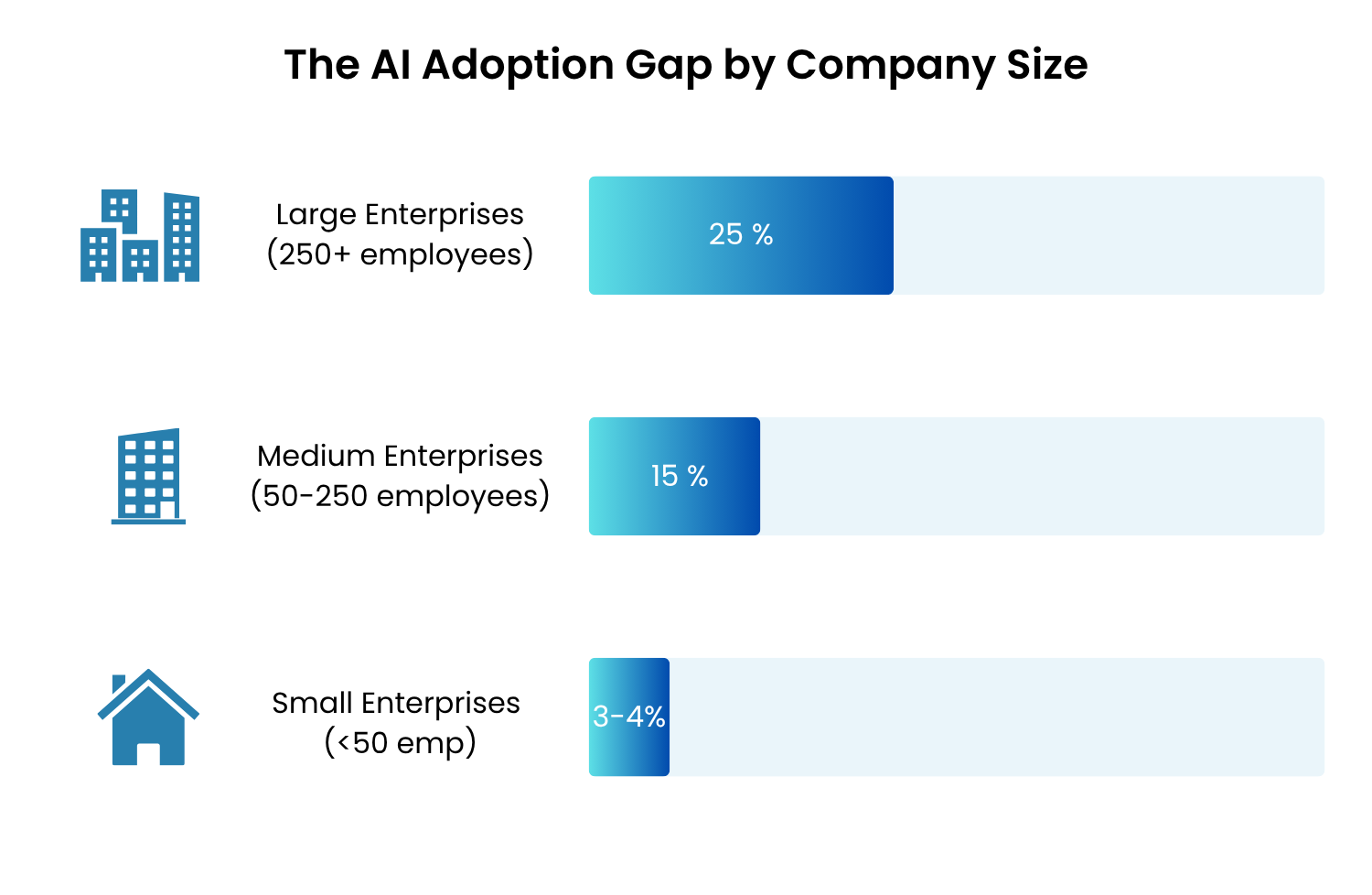
Here's a number that should give every small business owner pause: 78% of large organizations now use AI in at least one business function. That's nearly double the rate from just a year ago. Generative AI alone has exploded into 71% of enterprise operations.
Now here's the other number: only 3-4% of SMEs in the United States use AI as a production technology.
That gap between the enterprise world, which is racing ahead, and smaller businesses, which are struggling to keep pace, is what the 2025 AI adoption data is really telling us. And understanding it is the first step toward doing something about it.
What Large Organizations Are Doing That SMEs Aren't
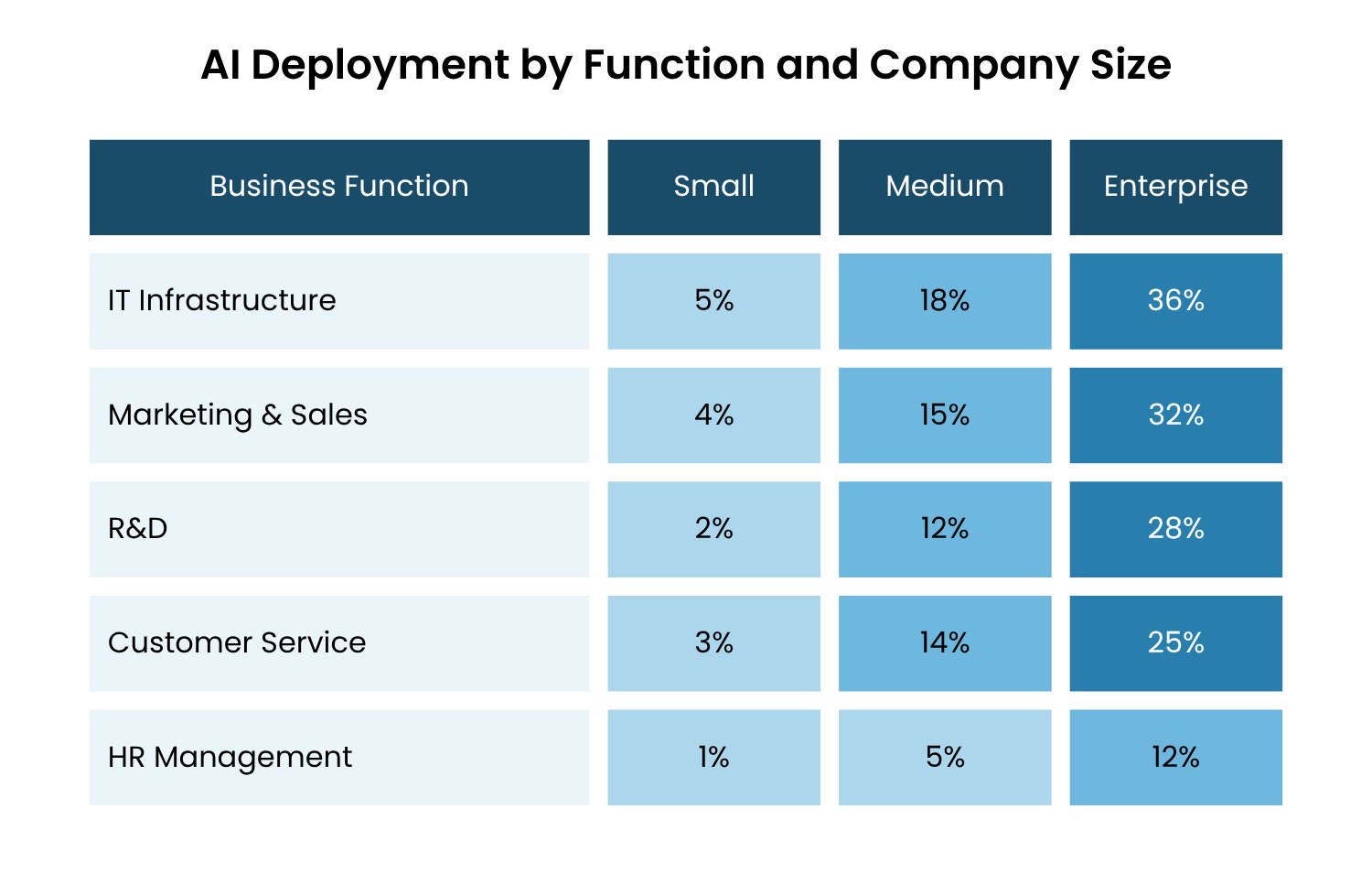
Before discussing how to close the gap, let’s first understand how larger organizations are actually using AI because it isn't one big, uniform deployment. Rather, it's systematic integration across everyday business functions.
Unsurprisingly, IT and infrastructure leads the way at 36% adoption and is growing the fastest. Companies are using AI to monitor systems, automate routine maintenance, and strengthen cybersecurity, making their IT smarter and more proactive.
Next come Marketing and sales, where AI is being used for customer segmentation, content generation, predictive analytics, and campaign optimization. What once required a team of analysts can now be run, more or less, on autopilot.
Research and development also benefits from AI, particularly in manufacturing and tech, where it can shorten innovation cycles and bring down development costs.
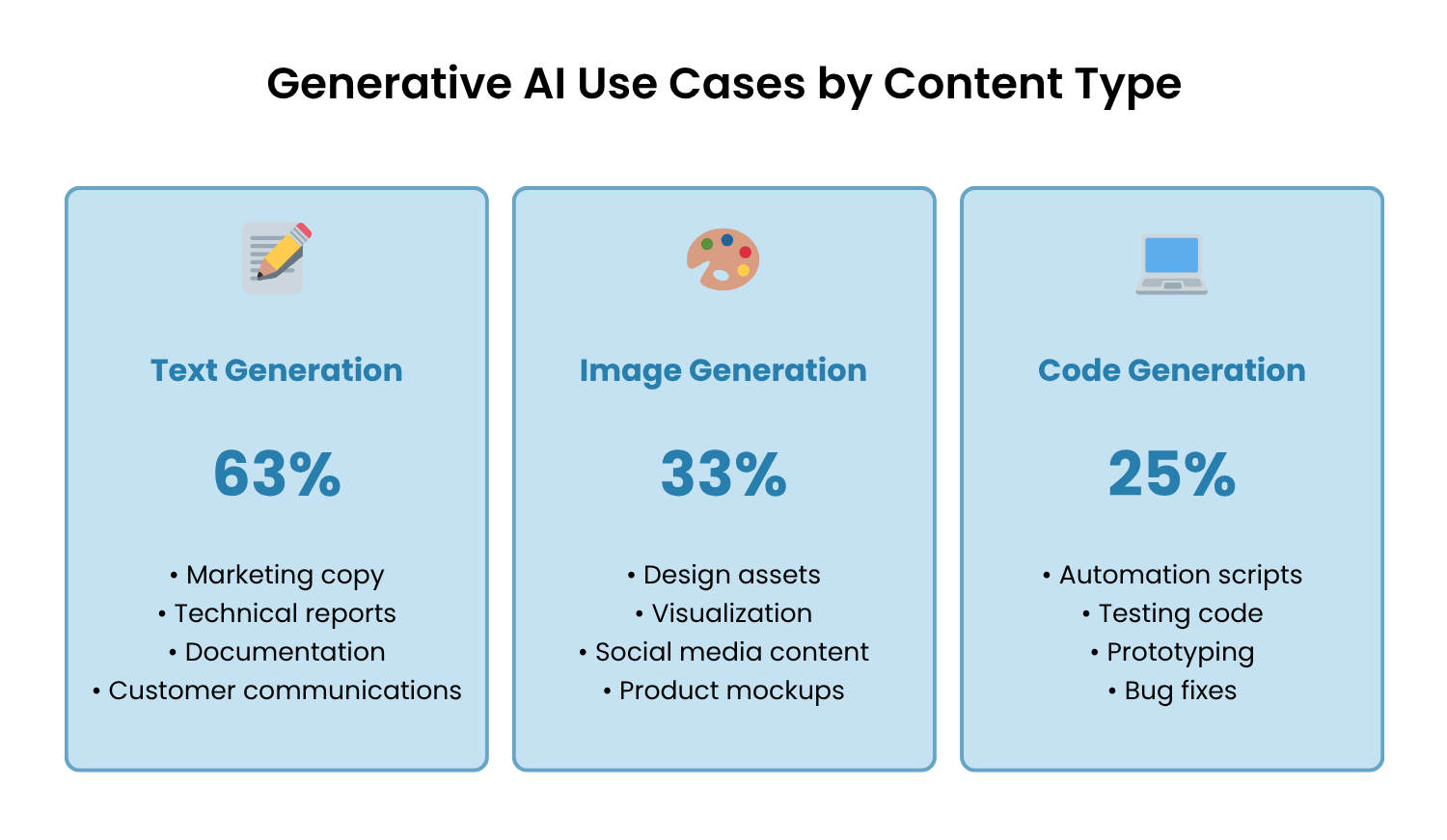
And when it comes to generative AI specifically, the numbers are striking: 63% of organizations use it to create text, over a third use it to generate images, and more than a quarter are using it to write code. This isn't science fiction anymore. It's Tuesday afternoon at most large companies.

Depth of Integration Matters
The deeper takeaway isn't just what AI is being used for. It's how deeply embedded it's becoming. The average enterprise in G7 countries runs 5.7 different AI applications. More than half consider AI critically important to their core operations. That's not experimentation. That's dependency.
This integration typically falls into three strategic categories:
Augmentation (approximately 50% of companies): AI streamlines operations, reduces costs, and enhances customer support without fundamentally changing the business model.
Transformation: The business model undergoes substantial changes, creating new revenue streams. Healthcare providers, for example, now use AI tools that analyze medical images and patient data with greater speed and accuracy than traditional methods.
Revolution: AI forces complete business model reinvention, as seen in translation services and customer support industries, where AI threatens core value propositions.
Why Are Smaller Businesses Struggling With AI Adoption?
Despite the inherent value of AI, why aren't more SMEs adopting it? It’s not because of a lack of desire. The reality is that the barriers are significant and deeply rooted in the system.
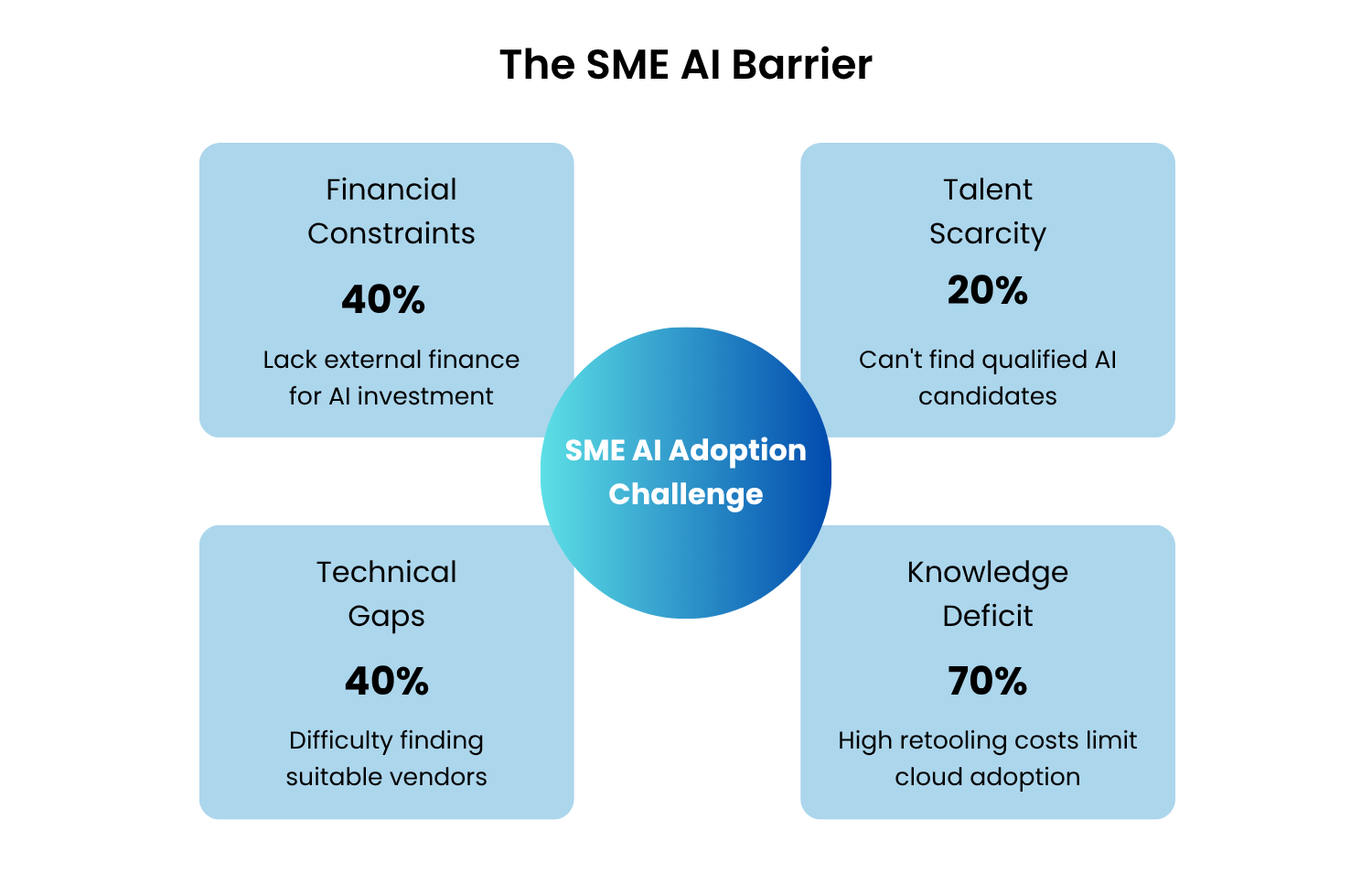
The financial challenge is the biggest one. About 40% of surveyed enterprises report that a lack of external financing constrained their AI use. Unlike large companies with ready access to capital markets, SMEs are often choosing between investing in AI and covering operational basics. High upfront costs, combined with genuine difficulty estimating ROI, make it hard to justify the leap. And for a business running on thin margins, a failed tech investment isn't a learning experience. It's a serious setback.
Talent is the second major hurdle. Smaller firms are competing for AI expertise against giants like Google, Microsoft, and Amazon. Without comparable salaries, equity packages, or cutting-edge projects, the SMEs have no way of attracting the best and the brightest. Moreover, roughly 20% of smaller enterprises aren't even sure what skills to look for in their first AI-focused employee. And unlike large organizations, SMEs typically don't have the resources to develop that expertise internally over time.
Then there are the operational and technical barriers. Over 40% of enterprises report difficulty finding vendors who offer solutions actually tailored to smaller businesses. Most AI products are built for enterprise scale and enterprise budgets. Add to that the challenge of data readiness: effective AI needs clean, structured, well-maintained data, which many SMEs simply don't have yet, and the picture becomes even more complex.
However, these aren’t reasons to give up.
Should Your Business Invest in AI?
Like most cases in business strategy, the answer is it depends. More specifically, it depends on what you want AI to do for you.
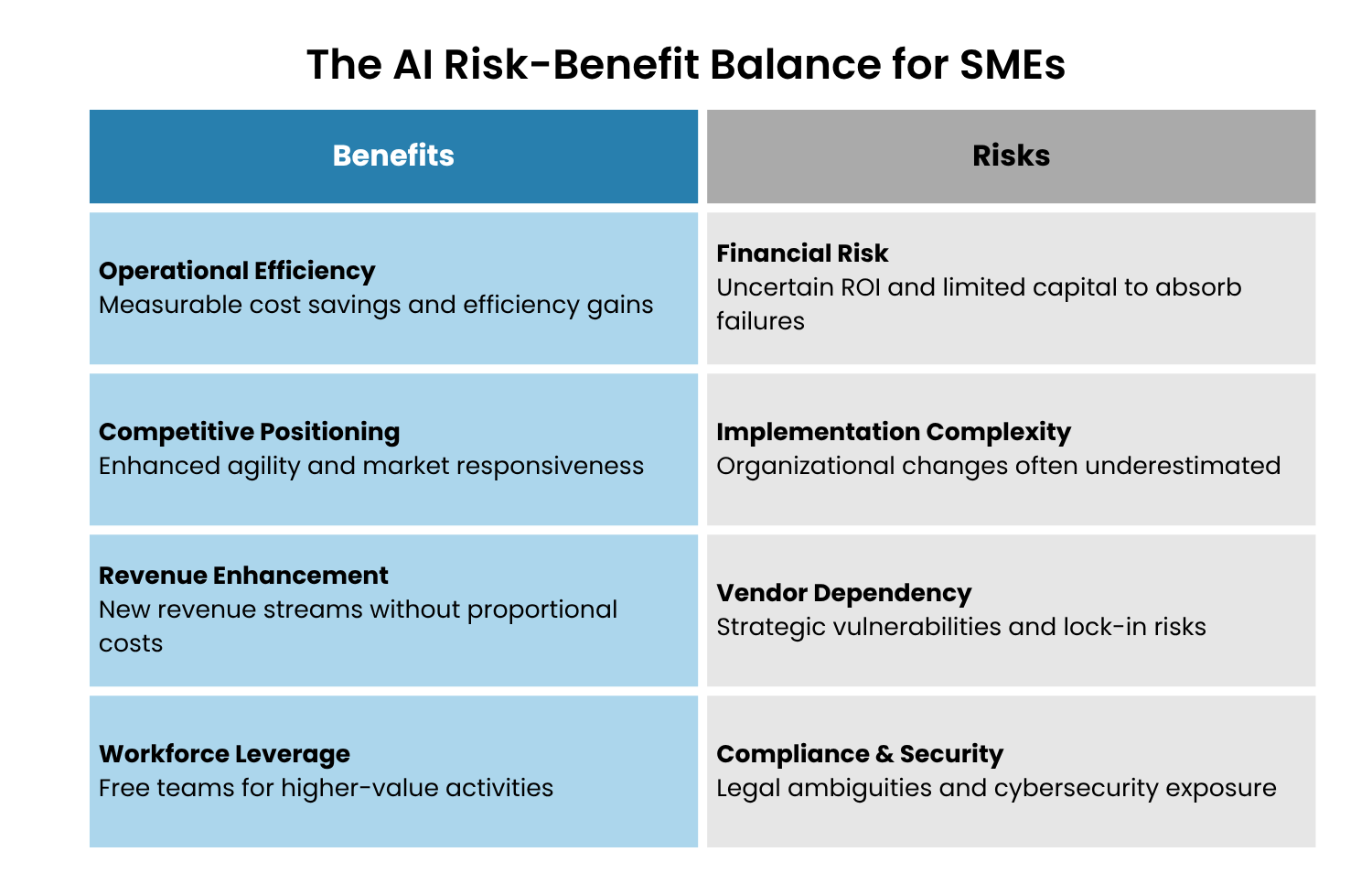
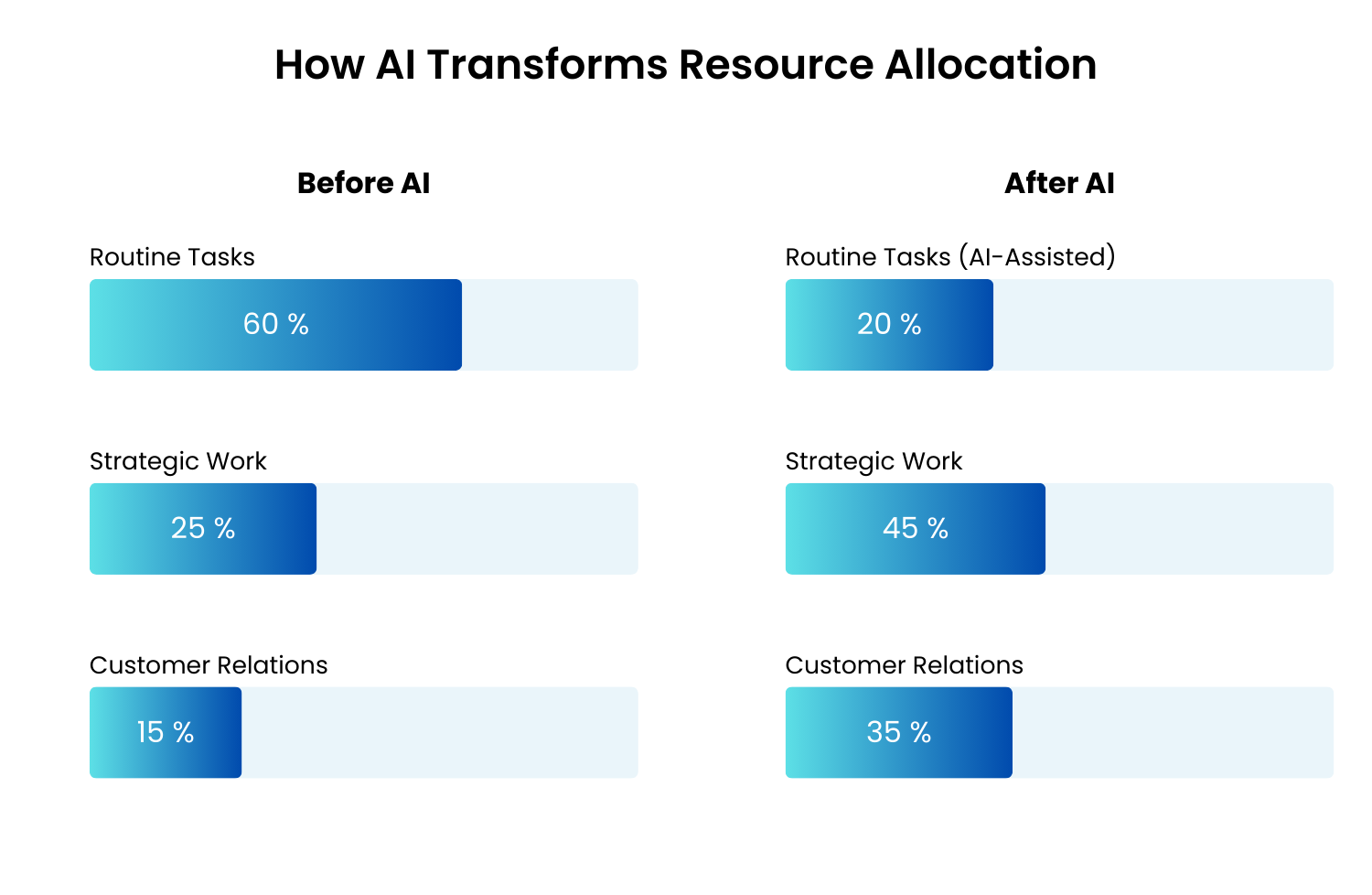
The upside is that AI can make your team dramatically more productive by handling the routine, repetitive tasks that would otherwise consume hours every week. It can help a small team compete at a scale that simply isn't possible without AI. Additionally, it opens new revenue opportunities, speeds up decision-making, and can amplify the innate advantages of smaller businesses, such as agility, customer relationships, and specialized expertise.
On the flip side, the risks are real too. Poor ROI estimation leads to expensive failed deployments. Underestimating the scale of organizational change required by AI leads to half-implemented systems, which drain resources but deliver nothing. In addition, vendor lock-in, data privacy exposure, and cybersecurity vulnerabilities are all genuine concerns, especially for businesses without dedicated legal or security teams.
The businesses that fail at AI adoption usually do one of two things. One, they wait too long, allowing the competitive gap to become impossible to close. Two, they rush in without a clear plan, resulting in wasted resources on the wrong solutions.
A Practical Roadmap for AI Adoption for SMEs
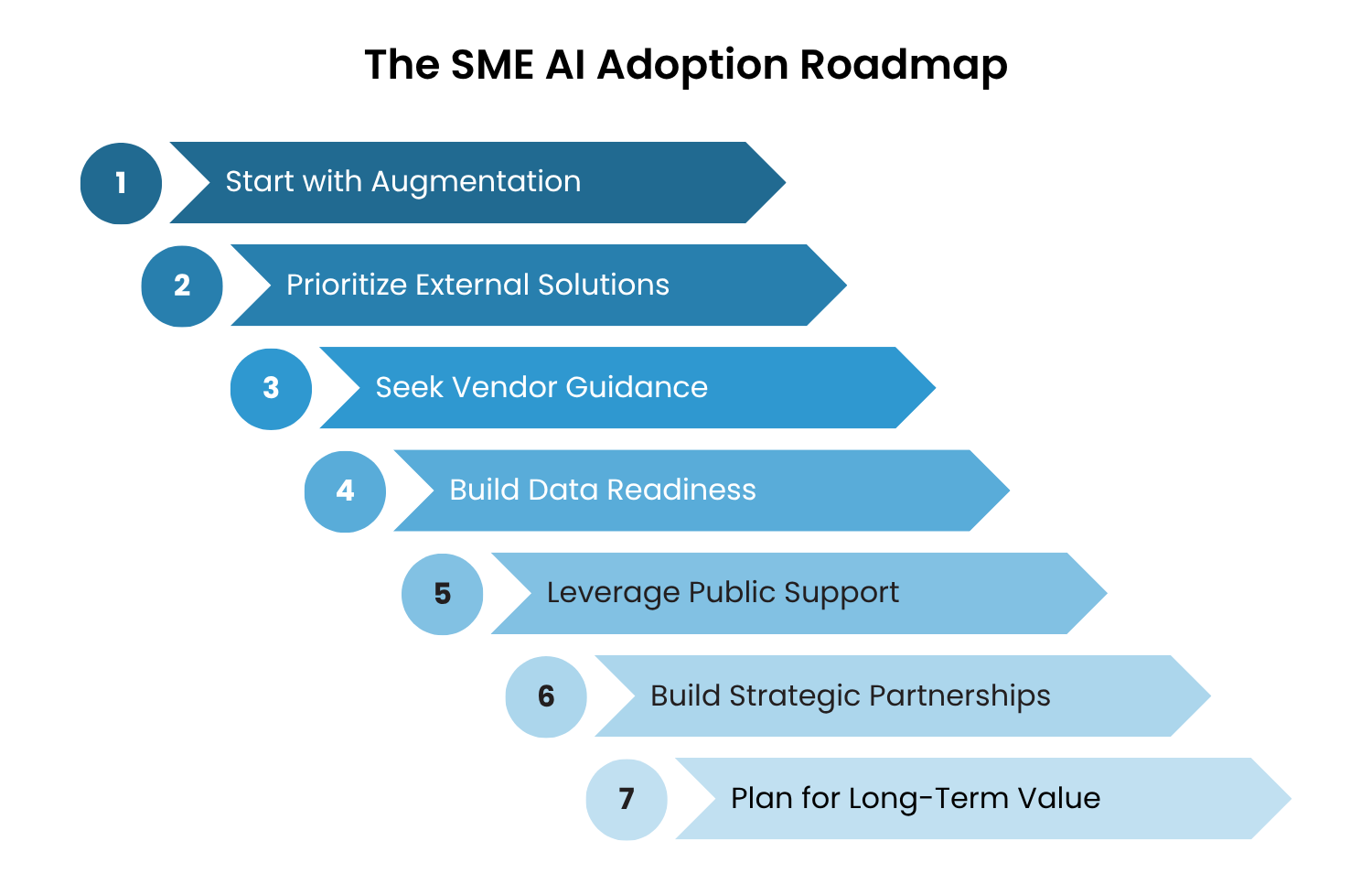
If you've decided to move forward strategically with AI adoption, here's our recommended approach.
Start with augmentation, not transformation. Don't try to overhaul your business model with AI on day one. Instead, look for opportunities to streamline what you're already doing, such as automating routine customer inquiries, processing invoices, generating marketing content, and optimizing inventory. These applications will deliver measurable value without massive risk.
Buy before you build. Very few SMEs should be developing proprietary AI tools. The off-the-shelf solutions available today are remarkably capable. Your energy is better spent finding the right solution and implementing it well than trying to build something from scratch.
Get your data in order first. AI is only as good as the data you feed it. So, before investing in AI tools, make sure that you have proper data collection and storage systems in place. Additionally, ensure that your existing data is clean and well-organized. This step will pay off regardless of which AI tools you eventually choose.
Take advantage of public support programs. Governments and industry associations are increasingly offering programs specifically designed to help SMEs adopt AI. These typically include subsidized training, computing resources, and guidance on vendor selection, and are genuinely useful, but underutilized.
Build partnerships instead of going it alone. Rather than trying to recruit scarce (and expensive) AI talent, consider working with external consultants or managed IT partners who can guide you through implementation and manage ongoing support. This is exactly the kind of work we do with our clients at Jones IT.
Set realistic expectations. AI adoption is a journey. Your first implementation probably won't be your best one. The goal is to start building organizational capability and understanding that makes each successive deployment more effective.
The Cost of Delaying AI Endorsement
The scary thing about the AI gap is that it isn't static, but widening.
Organizations that deepen their AI integration will become more efficient, enabling them to undercut on price. Their customers' expectations will evolve based on AI-powered experiences, making traditional service levels feel inadequate. Talented employees will also be more inclined to work in organizations that are using cutting-edge tools. And the vendor ecosystem will increasingly optimize for AI-integrated businesses, making traditional approaches more expensive and cumbersome over time.
The window for catching up is open right now as AI is still evolving, and the competitive advantages aren't yet insurmountable. On a positive note, the cost of entry has never been lower. While waiting for AI to become "easier" or "cheaper" appears to be a reasonable strategy, it is very likely to end badly.
Conclusion: Strategic Realism for the AI Era
AI adoption for SMEs isn't about matching what large enterprises are doing. Rather, it's about using AI in ways that make sense for your size, resources, and business goals, but, more importantly, doing so before your competitors do.
The barriers are real, but so are the benefits. The businesses that succeed in the age of AI will be the ones that adopt a realistic and clear-eyed strategy, beginning with small, incremental steps and scaling up over time.
The time to start, carefully and strategically, is now.
Jones IT has helped hundreds of Bay Area businesses navigate exactly these decisions, including technology roadmap development, risk-benefit analysis, vendor selection, and implementation support. Reach out if you'd like to talk through where AI fits in your business.


About The Author

Hari SubediMarketing Manager at Jones IT
Hari is an online marketing professional with a focus on content marketing. He writes on topics related to IT, Security, and Small Business. He is also the founder and managing director of Girivar Kft., a business services company located in Budapest, Hungary.

AI risk management for SMEs doesn't require enterprise-level resources. Get direct answers on NIST AI RMF, shadow AI prevention, bias mitigation, and vendor security from Jones IT.