
What Are Fully Managed IT Services? A Guide for Bay Area Startups
A fintech company in the Financial District came to us a couple of years ago, about 40 people, post-Series A, growing fast. The person handling IT, a capable operations manager who had taken it on as a side responsibility when the company was eight people, sent us a message, which I’ve received in different forms over 20 years of doing this work in the Bay Area. It went roughly: we have laptops that aren’t enrolled in MDM, a vendor list no one can fully account for, a SOC 2 audit starting in six weeks, and I don’t have time to fix any of it.
That shape of problem is consistent across the Bay Area companies that reach out to us. The details change, but the underlying situation doesn’t. A growing company whose informal IT arrangements have stopped working, usually all at once, usually at the worst possible moment. Fully managed IT services exist for exactly this transition.
Fully managed IT services are designed for exactly this moment. But before we get into what the model includes and whether it's the right fit for your company, let's be clear about what "fully managed" actually means, because the term gets used loosely in this industry.
What Are Fully Managed IT Services?
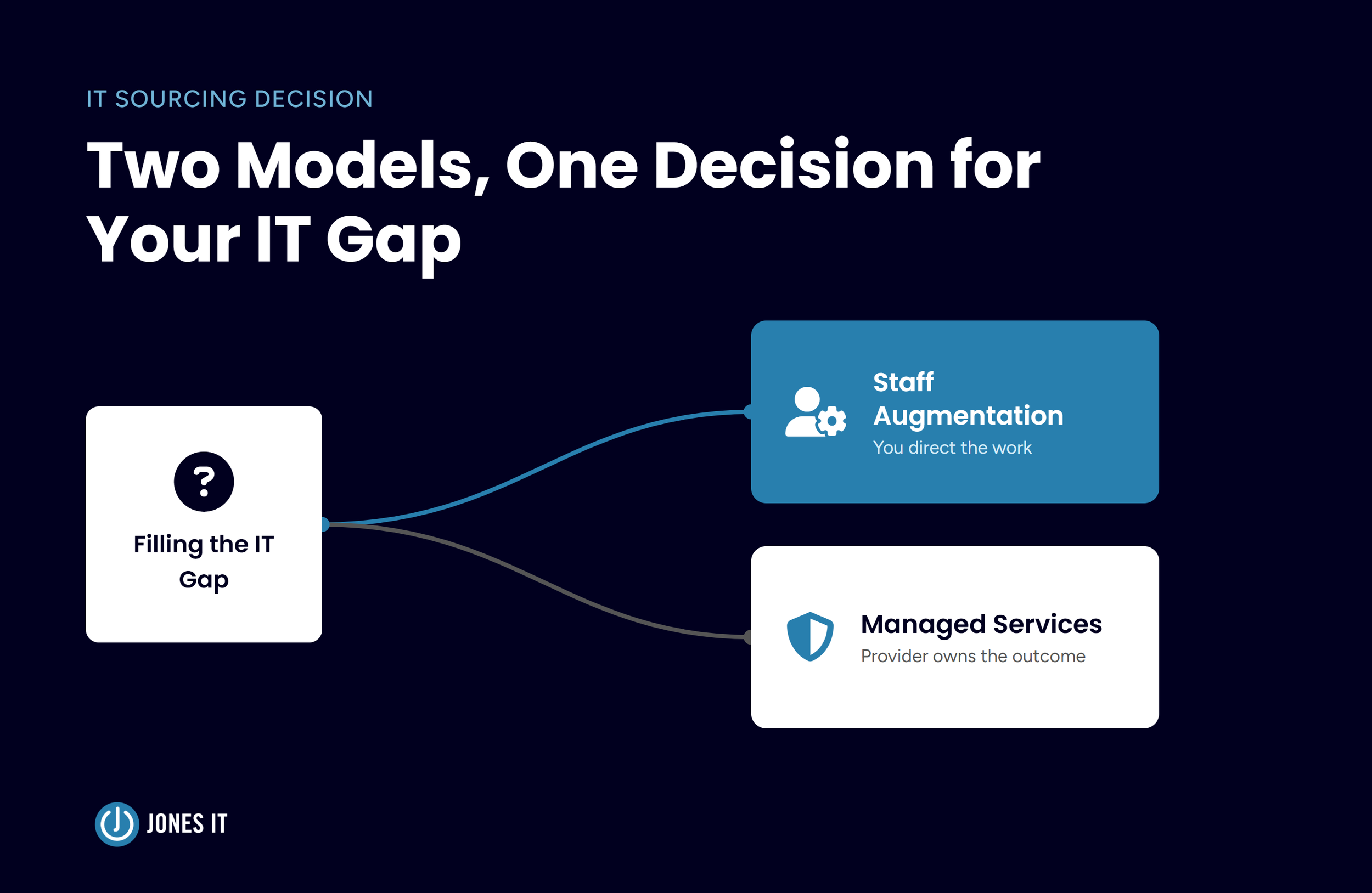
Fully managed IT services is a service model in which a single provider takes complete, end-to-end responsibility for a company's entire IT environment. That means one provider handles everything: your devices, your network, your cloud infrastructure, your security posture, your compliance requirements, and your helpdesk. One contract, one point of accountability, no gaps between vendors pointing fingers at each other.
It's worth distinguishing this from break-fix IT support, which is reactive by nature (you call when something breaks, you pay for the visit, and you hope it doesn't happen again). Fully managed IT is proactive. Your provider monitors your systems continuously, patches vulnerabilities before they become incidents, and plans your infrastructure roadmap alongside your business growth. You're not buying incident response. You're buying prevention and strategic partnership.
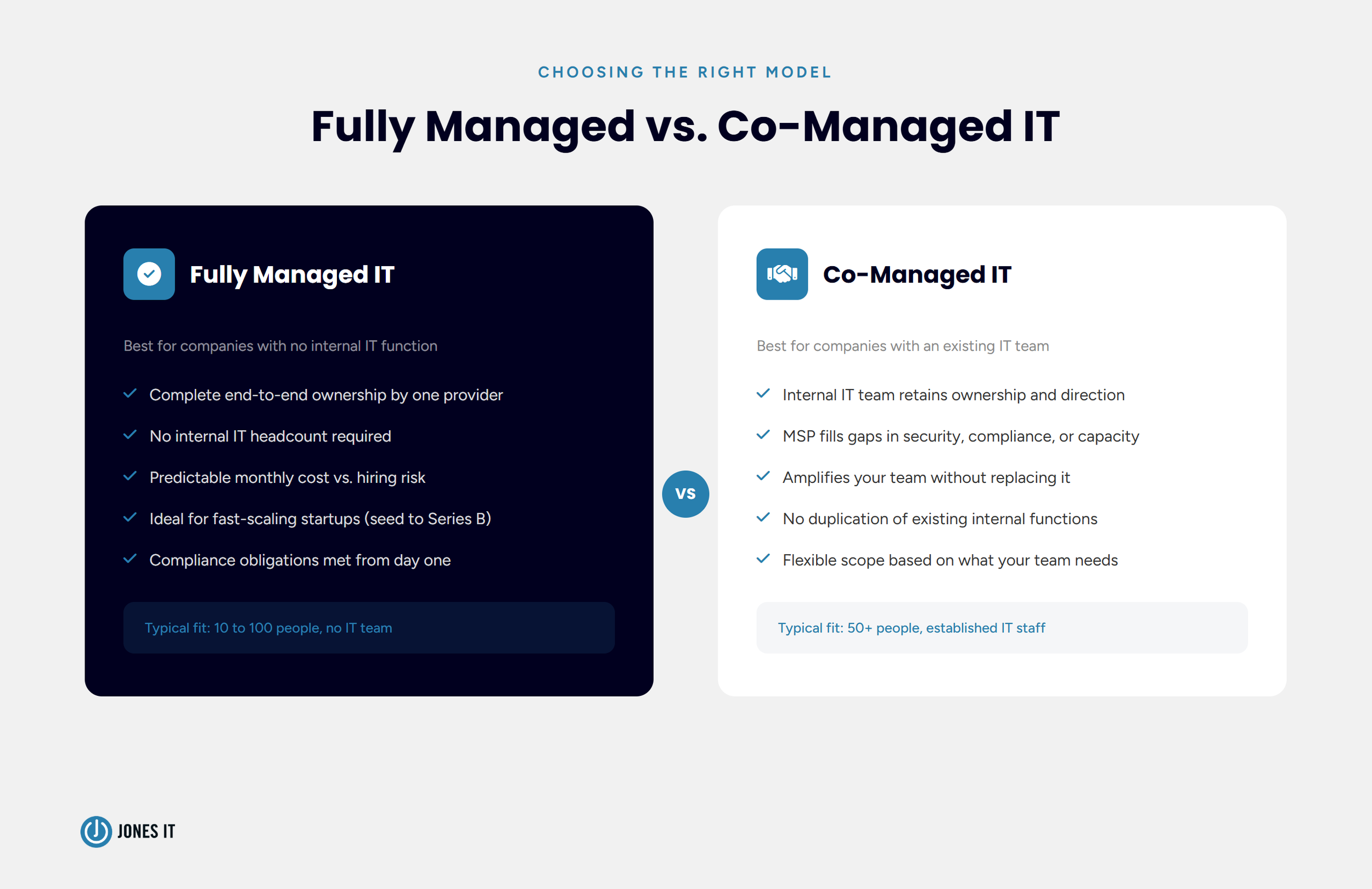
It's also different from co-managed IT, where your internal IT team handles day-to-day operations and the MSP supplements specific functions or provides overflow support. Co-managed works well for companies that already have IT staff and want to extend their capabilities without doubling headcount. Fully managed is the right call when there's no internal IT function to speak of, or when a company is scaling fast enough that building one internally doesn't make sense yet.
What Fully Managed IT Services Actually Cover
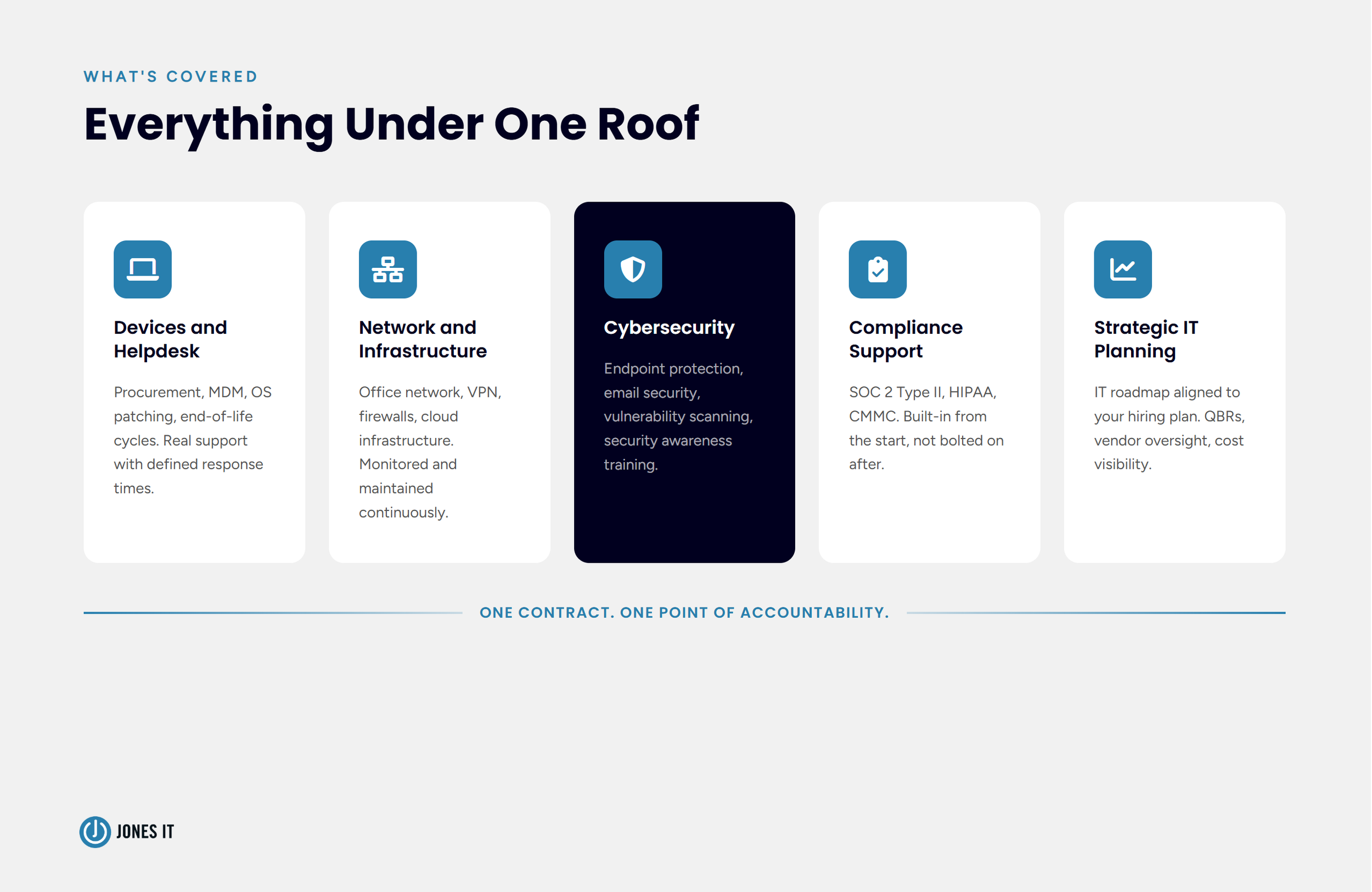
Fully managed service covers everything that touches your technology environment, which is a real answer, not a dodge. Let’s make it concrete, because vague scope is one of the legitimate criticisms of managed IT services as a category.
Device Management and Helpdesk
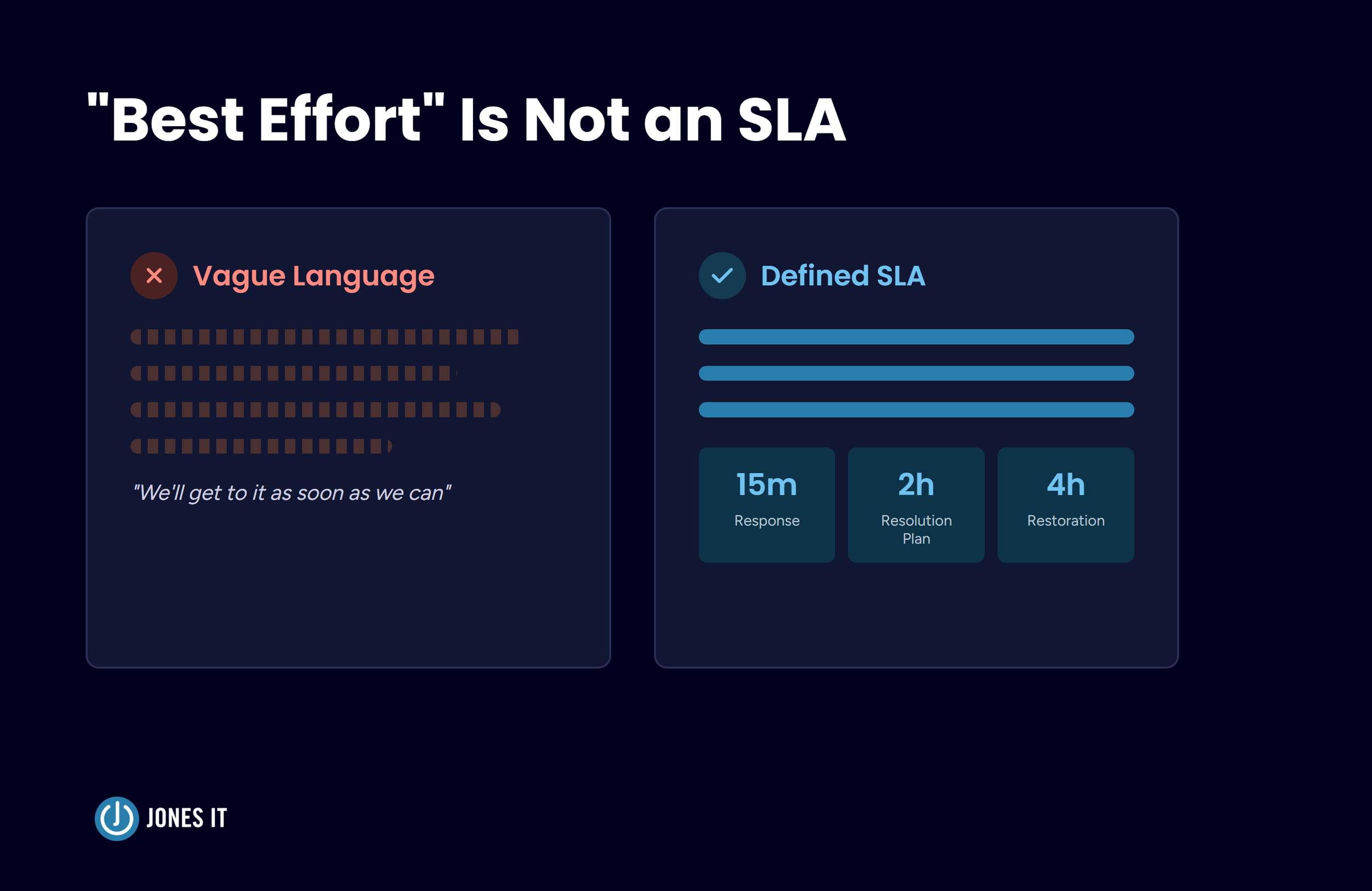
Every laptop, desktop, and mobile device your team uses falls under your provider's management. That covers procurement, configuration, MDM enrollment, OS patching, and end-of-life replacement cycles. On the helpdesk side, your employees have a real support channel with defined response times, not a shared inbox that goes dark when someone's out sick.
Network and Infrastructure
Your office network, VPN, firewalls, and any on-premises servers are monitored and maintained. For most of the Bay Area companies we work with, this increasingly means managing cloud infrastructure alongside physical hardware. The two rarely exist in isolation anymore.
Cybersecurity
Seed-through-Series-B companies in fintech, SaaS, and biotech face the most acute security exposure, because they’re large enough to be targeted and still building the foundation. Fully managed IT services include endpoint protection, email security, vulnerability scanning, security awareness training, and incident response. For companies pursuing SOC 2 or preparing for a HIPAA audit, this layer has to be built correctly from the start. Retrofitting security after the fact is expensive and stressful in a way that building it in never is.
Compliance Support
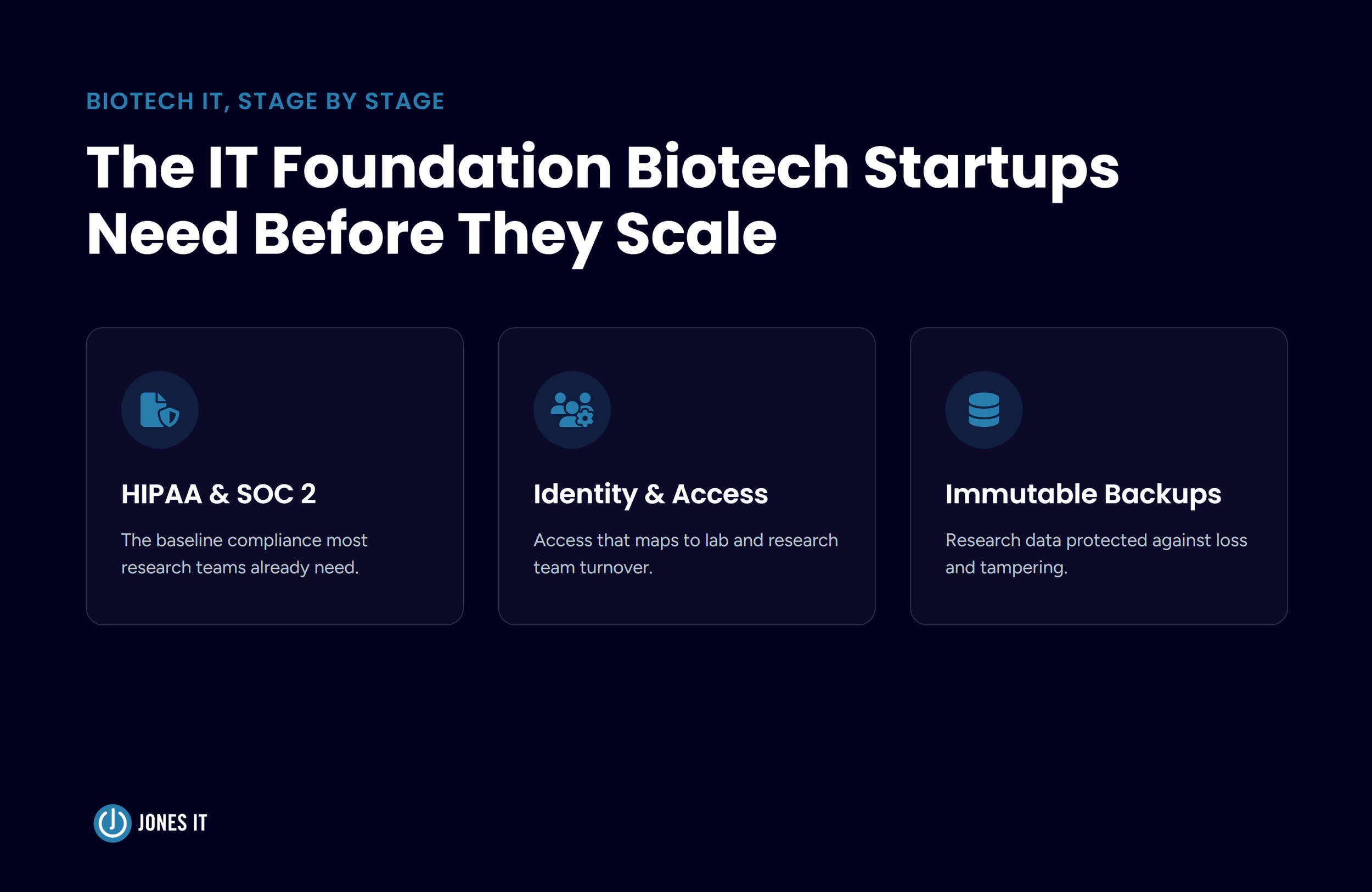
Bay Area startups in regulated industries, whether that's healthcare data, financial services, or government contracting, face real compliance obligations that don't wait for you to be ready. A fully managed IT partner who understands SOC 2 Type II, HIPAA, and CMMC requirements is not optional at a certain stage. It's the cost of operating in those markets.
Strategic IT Planning
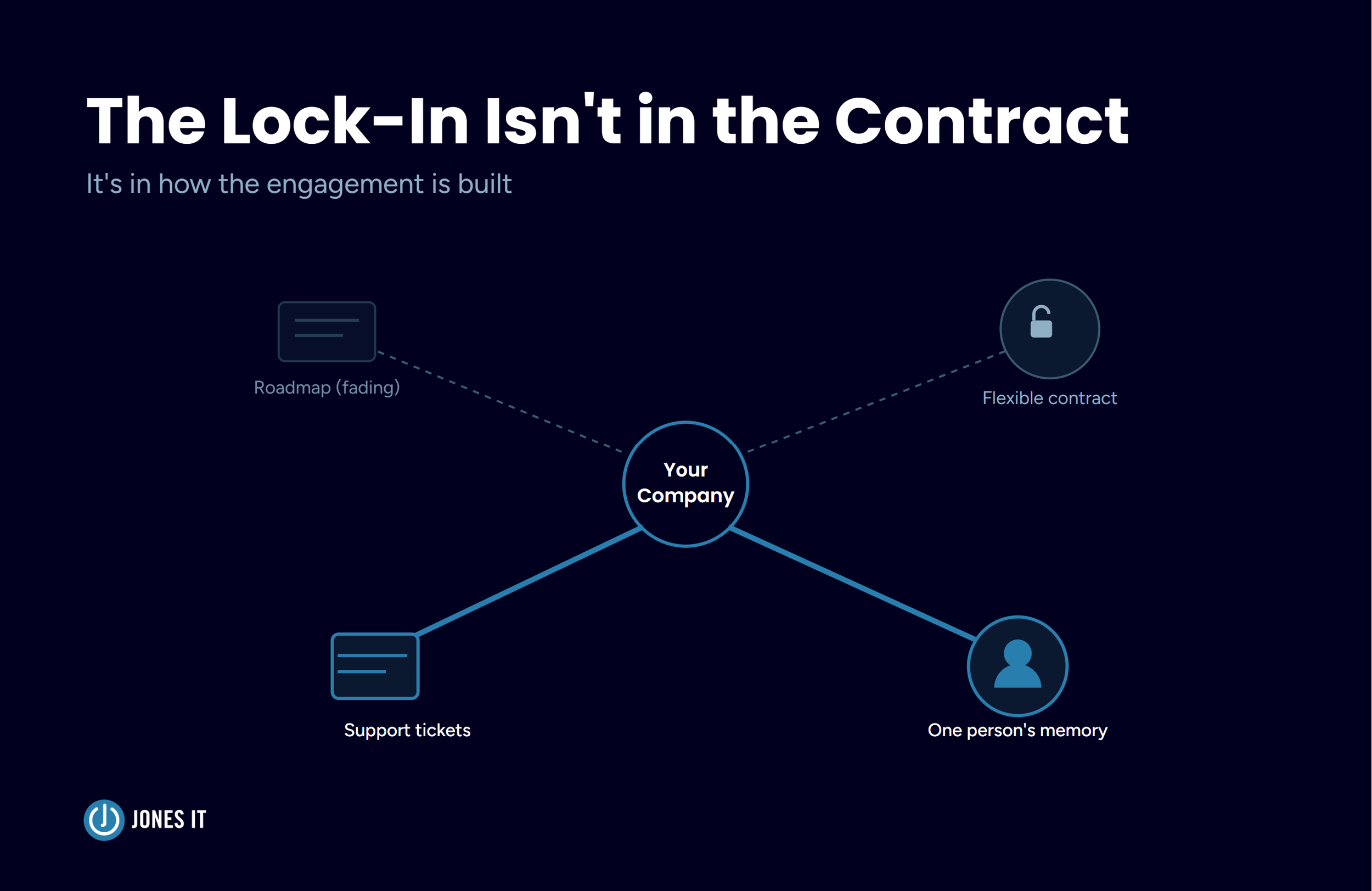
The right provider isn’t just keeping the lights on. They’re sitting in quarterly business reviews, mapping your IT roadmap to your hiring plan, flagging vendor contracts that are creating lock-in problems, and giving your leadership team a clear picture of where IT costs are going. That’s the difference between a true IT partner and a help desk with a monthly fee, and it’s the difference that compounds over time.
Who Fully Managed IT Services Are Built For
Companies that need their IT to run well but don’t want to build and manage an internal IT department. That covers a wider range of situations than it might initially seem.
For early-stage startups, the appeal is straightforward. Hiring a full-time IT director in San Francisco costs north of $150,000 in salary alone, before benefits, equipment, and management overhead. A fully managed IT model gives you the equivalent of a seasoned IT department at a predictable monthly cost (typically, a fraction of what you’d pay your internal team), without the hiring risk.
For growth-stage companies that have scaled from 20 to 80 people in a year, the appeal is different. The informal IT arrangements that worked at 20 people, whoever was most technical handling the Wi-Fi and onboarding laptops, have collapsed under the weight of actual scale. Compliance requirements have appeared on the horizon. The CEO is getting asked by enterprise customers about their security posture. Fully managed IT gets the foundation right quickly.
For companies moving into regulated markets, fintech companies handling sensitive financial data, biotech firms working with PHI, defense tech startups navigating CMMC, fully managed IT with a compliance-aware provider isn’t just convenient. With the right provider, you actually meet those obligations. Without one, you’re guessing.
Where fully managed IT is probably not the right fit: companies with an established internal IT team that's functioning well. Those teams often benefit more from a co-managed model, where the MSP supplements specific capabilities like cybersecurity or compliance without duplicating work.
How Jones IT Delivers Fully Managed IT Services
I’ve been doing IT services in the Bay Area since 2002. The problems that send companies to us have changed in their specifics, the tooling is different, the compliance requirements are more complex, but the underlying dynamic is consistent: a growing company whose technology needs have outpaced their current IT arrangement, and a leadership team that would rather focus on their actual business than manage an IT function.
What I’ve tried to build at Jones IT is a model that treats clients like the smart, busy people they are. Founders, COOs, controllers, and IT managers at growing Bay Area companies don’t want to babysit a vendor or decode a service tier. They want a provider who shows up prepared, tells them what we actually see, and takes ownership of the outcome. That’s the standard we hold ourselves to.
In practice, that means pricing that doesn’t require a decoder ring. Per-user, per-month, predictable, with no surprise out-of-scope fees when something difficult comes up. It means engineers who can actually get in the car and come to your office in SoMa, the Financial District, Mission Bay, Dogpatch, or Potrero Hill when remote support isn’t enough. And it means conversations where we tell you what we see, not what we think you want to hear, including when we think your current setup is riskier than you realize.
Figma, Superhuman, and Verge Genomics have trusted us to manage their IT as they scaled. The companies we work with chose San Francisco because they’re moving fast and in competitive markets. Their technology has to work, and they don’t have time for an IT partner who doesn’t.
Fully Managed IT Services vs. Co-Managed IT: How to Choose
We get this question often enough that it's worth addressing directly. The decision usually comes down to three things: whether you have internal IT staff, what stage your company is at, and how complex your compliance requirements are.
If you have no internal IT function, or your IT is currently handled by someone whose actual job is operations or engineering, fully managed IT is almost always the right call. The gap between informal IT and what a growing company actually needs is wider than most people realize until something goes wrong.
If you have an IT manager or small IT team who are capable and want to stay in the driver's seat, co-managed IT gives them the backup, the security tooling, and the specialized expertise they need without taking over their function. It's an amplifier, not a replacement.
We offer both models. You can read about our co-managed IT services if that's the direction that fits your situation better.
Either way, the goal is the same: your IT should be an asset that helps your company move faster, not a liability that slows it down.
What to Look for in a Fully Managed IT Provider
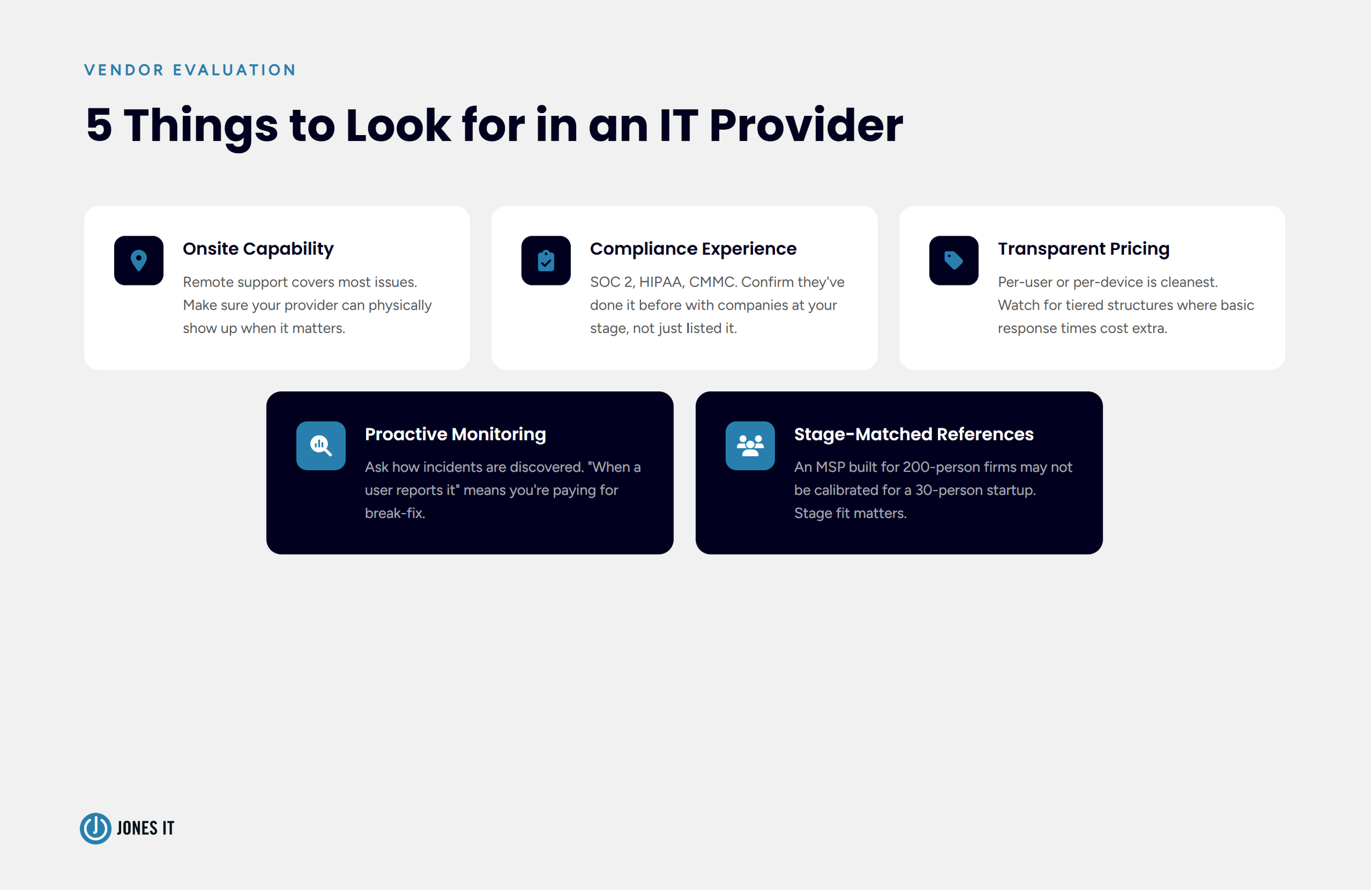
Not all managed IT providers are built the same, and in a market as crowded as the Bay Area, the differences matter. Here's what to look for when you're evaluating options:
Onsite capability: Remote support handles most things, but not everything. Find a provider with engineers who can show up when it counts.
Compliance experience: If SOC 2, HIPAA, or CMMC are on your roadmap, confirm your provider has done this before with companies in your situation, not just that they offer it.
Transparent pricing: Per-user or per-device pricing is the clearest model. Be cautious of tiered structures where basic response times cost extra.
Proactive monitoring over reactive support: Ask how incidents are typically discovered. If the answer is 'when a user reports a problem,' that's a break-fix model with a monthly fee.
References from companies at your stage: An MSP that's great for a 200-person company may not always be calibrated for a 30-person startup. Stage fit matters.
The Right IT Foundation for Where You're Going
Building a company in the Bay Area is hard enough without IT becoming the thing that slows you down. Fully managed IT services let your team focus on the work that actually moves your business forward, with the confidence that the infrastructure underneath it is secure, compliant, and in the hands of people who are paying attention.
We’ve spent more than two decades building that foundation for startups and growth-stage companies across San Francisco. If your IT situation feels like it’s outpacing your current setup, get in touch and we’ll figure out what fits.
Reach out to us and we'll take it from there.


About The Author

Evan JonesFounder and CEO of Jones IT
With over two decades of IT experience in San Francisco, Evan guides Jones IT's long-term strategy, finances, and culture, with a vision of building the city's highest-rated IT services firm. Outside of work, you'll find him on the golf course or running Bay Area Warriors, his non-profit connecting Bay Area kids to college through basketball.
Mac vs. PC for startups isn't a company-wide choice; it’s a per-role one. Use this framework to match hardware to software needs and efficiently manage a mixed fleet.