
The executive quick-reference guide to managing AI risks in startups and SMEs.
AI risk management for SMEs is the structured process of identifying, assessing, and controlling risks from AI systems before they cause data breaches, compliance failures, or operational disruption. For smaller organizations, the stakes are different than they are for enterprises: there's less legal cushion, less PR bandwidth, and far less room to absorb the fallout from a major AI incident.
When we talk to SME leaders about AI adoption, the questions we hear are remarkably consistent. Everyone wants to know: Do we really need formal frameworks? How do we prevent shadow AI? What happens when our vendor gets compromised?
This FAQ provides direct answers to the most common questions we hear from CTOs, CIOs, and founders navigating AI risk management. Think of it as your quick-reference guide, with links to deeper implementation resources when you're ready for the details.
AI Risk Management Fundamentals for SMEs
1. What is AI risk management, and why should SMEs care?
AI risk management is the systematic process of identifying, assessing, and mitigating potential negative impacts from AI systems while maximizing their benefits.
For SMEs, this isn't just a compliance exercise. A single AI failure, such as a data breach through an AI tool, a biased algorithm that discriminates against customers, or model drift that degrades performance, can cause catastrophic reputational and financial damage. Unlike enterprises with deep legal and PR resources to weather these storms, SMEs often can't recover from major AI incidents.
Effective risk management ensures you're capturing AI's benefits without creating the liabilities that destroy smaller companies.
2. Do small companies really need complex frameworks like NIST or ISO?
Yes, but not in the way enterprises implement them.
AI systems in 50-person companies face the same threats as those in Fortune 500s: data poisoning, adversarial attacks, model drift, and bias amplification. The vulnerabilities don't scale down with company size.
The key is implementing these frameworks appropriately for your resources. The NIST AI Risk Management Framework is voluntary and flexible, designed to let SMEs start with lightweight policies and build security over time. You don't need to implement everything immediately, but you do need a structured approach from day one.
The biggest mistake we see is trying to do everything at once. Start with the basics, establish clear accountability, and build your program incrementally.
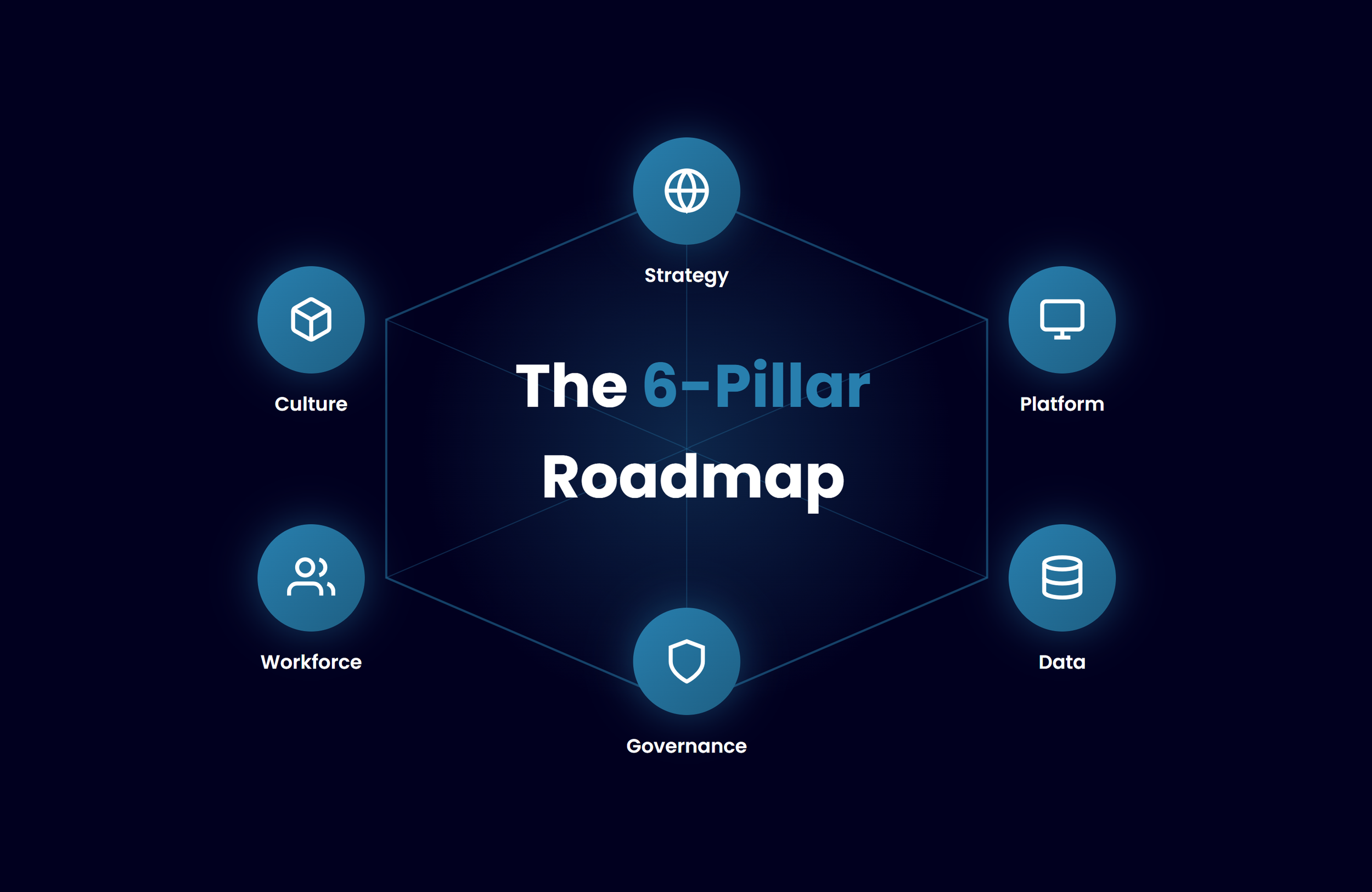
For detailed implementation guidance, see our 6-Pillar Agentic AI Implementation Roadmap.
3. How is AI risk different from traditional IT security?
Traditional software follows explicit rules. You can trace decisions through code, predict behavior, and identify failures systematically. When traditional systems fail, the root cause is usually clear.
AI systems, particularly those based on machine learning, are fundamentally different:
Probabilistic, not deterministic: AI outputs aren't guaranteed as they're statistical predictions.
Opaque decision-making: Even creators often can't fully explain specific decisions (the "black box" problem).
Data-dependent vulnerabilities: AI inherits biases and can be poisoned through training data manipulation.
Novel attack vectors: Adversarial attacks that trick AI with carefully crafted inputs have no equivalent in traditional software.
Performance degradation: Model drift means AI that works perfectly today can fail silently as real-world conditions change.
Your firewalls and endpoint protection are necessary but insufficient for these algorithmic threats. You need layered security that addresses AI-specific risks on top of traditional cybersecurity foundations.
AI Risk Management Frameworks: Which One Is Right for SMEs?
4. Which AI security framework should beginners start with?
For most SMEs, the NIST AI Risk Management Framework (AI RMF) is the best starting point becaue it is:
Voluntary and non-sector specific
Free, with extensive documentation
Organized into four accessible functions: Govern, Map, Measure, and Manage
Designed to work without requiring AI security specialists on staff
European SMEs should also consider the ENISA Framework for AI Cybersecurity Practices (FAICP), which aligns with EU regulations and offers a layered security approach.
Both frameworks are flexible enough to start small and scale as your AI adoption matures. The key is choosing one primary framework rather than trying to comply with multiple standards simultaneously.
5. What is the EU AI Act, and does it apply to SMEs?
The EU AI Act is comprehensive legislation that classifies AI systems by risk level and imposes requirements accordingly.
While it includes SME-friendly provisions like regulatory sandboxes, it imposes strict obligations on "high-risk" AI systems, such as those used in hiring, credit scoring, healthcare, law enforcement, and other sensitive domains. Requirements include:
Data quality and governance standards
Transparency and documentation
Human oversight mechanisms
Technical robustness testing
Conformity assessments
Even if you're not developing high-risk AI, you may need to meet these standards to work with enterprise clients who require vendor compliance. Many large organizations now mandate EU AI Act alignment for all AI-related vendors, regardless of where the vendor is based.
6. What is ISO/IEC 42001?
ISO/IEC 42001 is an international standard for establishing an Artificial Intelligence Management System (AIMS).
Unlike NIST RMF, which provides guidance, ISO 42001 is a certifiable standard. This matters when you need to prove robust AI governance to external stakeholders, including investors, enterprise clients, or partners conducting due diligence.
The certification process follows the pattern of other ISO standards: gap assessment, documentation, implementation, internal audit, and external certification audit. It's more resource-intensive than implementing NIST RMF alone, but provides formal recognition that can differentiate you in competitive situations.
Common AI Risk Management Challenges Small Businesses Face
7. What is "Shadow AI" and how do we prevent it?
Shadow AI refers to unsanctioned use of AI tools by employees. Examples include the marketing team using ChatGPT to draft client emails without IT approval, sales uploading prospect data to AI meeting recorders, or developers using code completion tools that send proprietary code to external servers.
Shadow AI carries the risk of massive data leakage that you don't even know is happening. IBM's Cost of Data Breach Report shows that shadow AI costs organizations an average of $670,000 annually through data exposure, compliance violations, and security incidents.
Prevention requires three elements:
Approved tools: Provide secure, vetted AI tools that meet employee needs. If you don't give people good tools, they'll find their own.
Technical controls: Block or monitor unapproved AI applications at the network level. DLP (Data Loss Prevention) policies can flag sensitive data being uploaded to external AI services.
Clear policies and training: Employees need to understand the specific risks of uploading proprietary data to public platforms. Generic "be careful" warnings don't work.
For comprehensive shadow AI prevention guidance, see our post on Safe AI Use and Security Guidance Employees Actually Need.
8. Can AI systems really discriminate?
Yes, and they do it at scale with systematic consistency that amplifies the damage.
AI systems inherit and often amplify biases present in their training data. A hiring tool trained on historical data from a male-dominated industry will systematically downgrade female candidates. A loan approval model trained on biased historical decisions will perpetuate discriminatory lending patterns.
The problem compounds because AI doesn't discriminate occasionally, it discriminates thousands of times before anyone notices the pattern.
Mitigation requires:
Regular fairness testing: Analyze outputs across demographic groups to detect skewed results.
Diverse training data: Ensure training datasets represent the full population you serve.
Human oversight: Require human review for high-impact decisions (hiring, lending, healthcare).
Vendor accountability: Choose vendors who can explain their bias mitigation strategies and provide fairness metrics.
This isn't just an ethical issue, but also a legal one. Discriminatory AI can violate employment law, fair lending regulations, and civil rights statutes. The penalties for such violations can completely destroy a business.
9. What happens if our AI vendor gets hacked?
This is supply chain risk, and it's one of the most underestimated threats in AI adoption.
SMEs typically rely on third-party AI vendors for core capabilities. When a vendor's model is poisoned, their security is compromised, or their data handling practices fail, that vendor breach becomes your breach in the eyes of customers and regulators.
If your AI-powered customer service tool's vendor gets compromised and customer PII is exposed, your customers don't care that it was the vendor's fault. You chose that vendor, and you are responsible.
Due diligence is critical before integration:
Verify security certifications (SOC 2 Type 2 minimum for any vendor handling sensitive data).
Review data handling policies and data residency.
Understand incident response procedures and notification timelines.
Assess their vulnerability management and patching practices.
Evaluate their own supply chain security.
Require contractual liability and indemnification clauses.
The cheapest AI vendor is rarely the best choice when you factor in security risk because a breach costs multiples of what you "saved" on vendor costs. Our Cybersecurity and Compliance Management service includes vendor risk assessment as part of ongoing security management.
Practical AI Risk Management Implementation for SMEs
10. We have limited resources. Where do we start AI implementation?
Start with visibility. You can't manage risks you don't know about.
Week 1-2: Map Your AI Inventory
List all AI tools currently in use across all departments.
Don't forget embedded AI in existing software like Microsoft 365 Copilot, Salesforce Einstein, etc.
Document shadow AI that you discover through network monitoring or employee surveys.
Week 3-4: Classify by Risk
Identify high-stakes AI: systems making decisions about people (hiring, performance management, customer credit).
Flag medium-risk AI: tools handling sensitive data but not making critical decisions.
Note low-stakes AI: tools handling only public information or performing non-critical tasks.
Month 2: Establish Lightweight Governance
Create a simple AI acceptable use policy defining approved tools and prohibited uses.
Assign accountability to someone specific, who will own AI risk.
Document approval workflow for new AI tools.
Month 3: Implement Basic Controls
Deploy technical controls to monitor or block unapproved AI tools.
Establish logging and monitoring for approved AI systems.
Create incident response procedures specific to AI failures.
This foundation takes 90 days with existing resources and positions you to scale safely as adoption grows.
If you'd like structured support through this process, our Compliance Kickstarter Program is designed to get organizations from zero to a working compliance foundation without requiring a full-time compliance hire.
For the complete implementation roadmap, see The SME Guide to AI Risk Management That Actually Works.
11. Do we need an AI ethics committee?
For most SMEs, the answer is no. Formal ethics committees are overkill.
What you need instead is a clear policy with assigned accountability to a senior leader or cross-functional working group consisting of IT, Legal, and Operations. This group should:
Review AI use cases before deployment
Monitor operational AI systems for concerning patterns
Address bias and fairness concerns
Make escalation decisions when issues arise
Three people meeting monthly with clear decision authority is more effective than a 12-person committee that produces reports nobody reads. The goal is actionable oversight, not bureaucracy.
12. How often should we update our AI risk assessment?
AI systems change rapidly, and your risk posture needs to keep pace.
Minimum viable cadence:
Full risk assessment: Every 6 months.
Trigger-based assessment: Whenever you significantly update a system, i.e. add new data sources, use new models, or expand the scope.
Continuous monitoring: Automated monitoring for drift, performance degradation, and anomalous behavior.
One-time assessments are largely ineffective. The AI system you audited six months ago isn't the same system running today if it's been retrained on new data or if the real-world environment has shifted.
Drift detection, monitoring for gradual performance changes, should be continuous. By the time you notice drift in a quarterly review, you may have made thousands of flawed decisions.
13. How can we reduce AI bias without a data science team?
Focus on outcome testing and human review rather than complex algorithmic retraining.
Regular outcome testing Analyze AI decisions across demographic groups monthly. Look for statistical disparities that suggest bias, and track metrics like approval rates, rejection rates, or quality scores by protected categories.
Human-in-the-loop review Require human review for critical decisions before they're finalized. Focus review capacity on borderline cases where AI confidence is lower, and empower reviewers to override AI recommendations and document why.
Vendor selection standards Choose vendors who can explain their fairness testing methodology. Require bias auditing results before purchase, and ask for explainability features that show why decisions were made.
Diverse input validation Have multiple people from different backgrounds review AI outputs to surface concerning patterns before they scale.
You don't need PhD data scientists to manage this. You need systematic processes and the willingness to pause or override AI when testing reveals problems.
Making AI Risk Management Work for Your Organization
AI risk management for SMEs isn't about achieving perfect security before you can adopt AI. That's neither possible nor necessary.
It's about adopting AI with structured frameworks that let you capture benefits while managing downside risks appropriately for your organization's size and resources.
The questions in this FAQ represent the most common concerns we address with SME clients. If you're asking these questions, you're asking the right ones. The next step is moving from questions to action.
Recommended next steps:
If you're just beginning AI adoption, read our SME Guide to Understanding Agentic AI to understand the landscape.
If you're ready to implement, download our AI Implementation Playbook for comprehensive guidance.
If you're concerned about shadow AI, read our analysis of The $670K Shadow AI Problem.
If you need implementation support, contact us to discuss how we can help you implement AI risk management frameworks alongside AI adoption.
The organizations that will thrive with AI aren't those with the biggest budgets or the most sophisticated data science teams. They're the ones who manage risk strategically while moving forward deliberately.
Do you need help with infrastructure, security, compliance, or day-to-day IT management as you implement AI capabilities? Our team has helped hundreds of Bay Area organizations secure their infrastructure, achieve compliance, and manage their IT as they test and implement new technologies. Schedule a free consultation today!


About The Author

Hari SubediMarketing Manager at Jones IT
Hari is an online marketing professional with a focus on content marketing. He writes on topics related to IT, Security, and Small Business. He is also the founder and managing director of Girivar Kft., a business services company located in Budapest, Hungary.

AI risk management for SMEs doesn't require enterprise-level resources. Get direct answers on NIST AI RMF, shadow AI prevention, bias mitigation, and vendor security from Jones IT.