
How to Get Maximum Value from Your Managed IT Services Partnership: A Strategic Guide
A VP of Engineering at a Mission Bay biotech company called us a few years ago with a problem that had nothing to do with technology. His company had been with their MSP for 18 months. Response times were fine. Uptime was good. However, his team had grown from 30 to 75 people, a SOC 2 audit was six months away, and the MSP had no idea any of it was coming. There was no regular strategy conversation, no shared roadmap, no mechanism for the relationship to evolve. Technically, the MSP was doing exactly what the contract said. The company just wasn't getting any value beyond that.
Getting maximum value from a managed IT services partnership requires more than choosing the right provider. It requires structuring the relationship so that your MSP actually understands your business and can contribute to it. Companies that do this well see 40 to 60 percent fewer issues during transitions and consistently stronger outcomes over time. Companies that treat their MSP as a reactive vendor tend to wonder why they're not getting more.
Here are the six practices that make the difference.
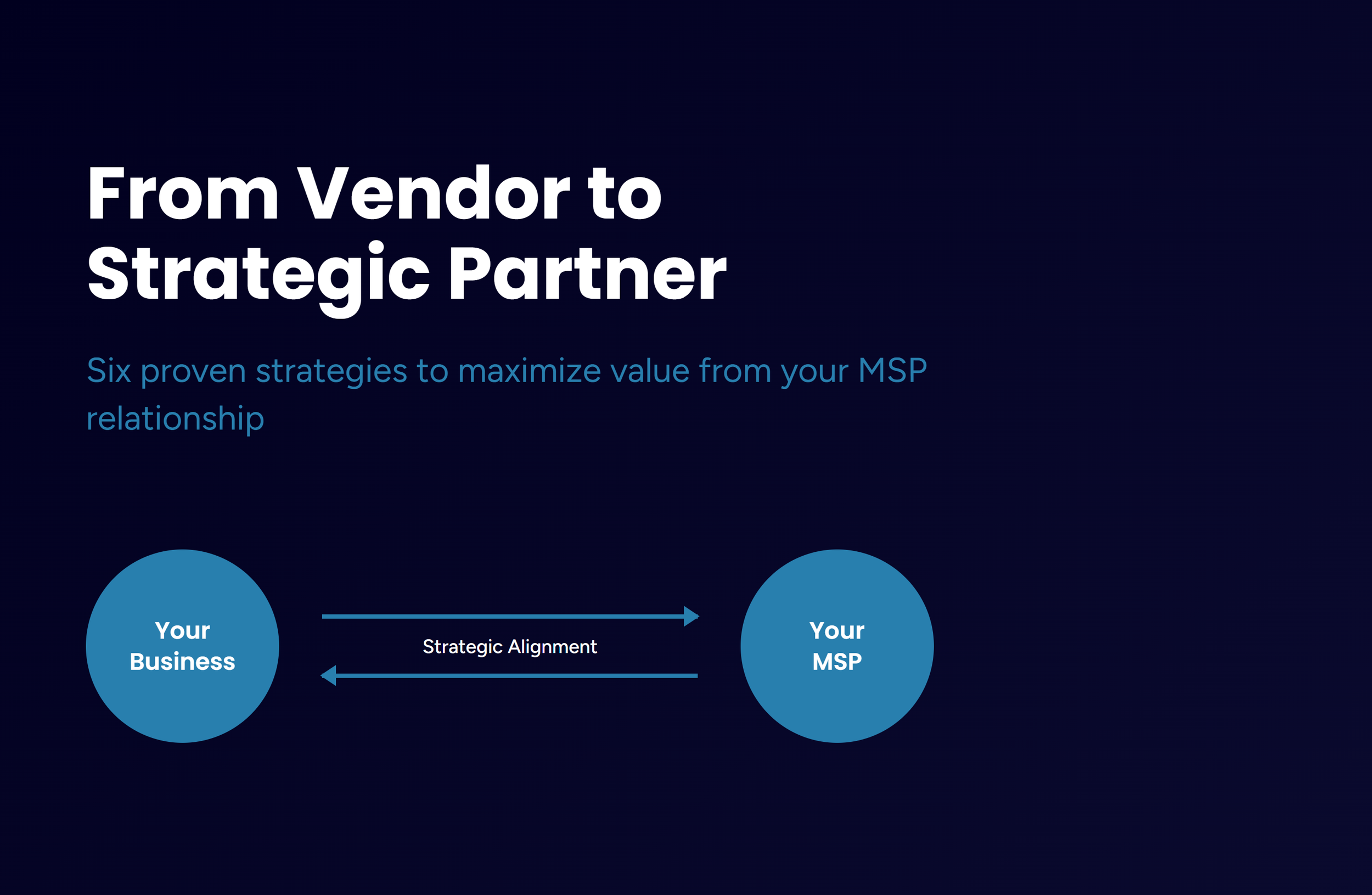
1. Strategic Alignment: Build the Foundation of the Managed IT Services Partnership Before You Sign
The work that determines whether an MSP partnership delivers real value starts before the contract is signed. Organizations that invest in genuine preparation see dramatically smoother onboarding and stronger long-term outcomes. Those who skip it spend months playing catch-up.
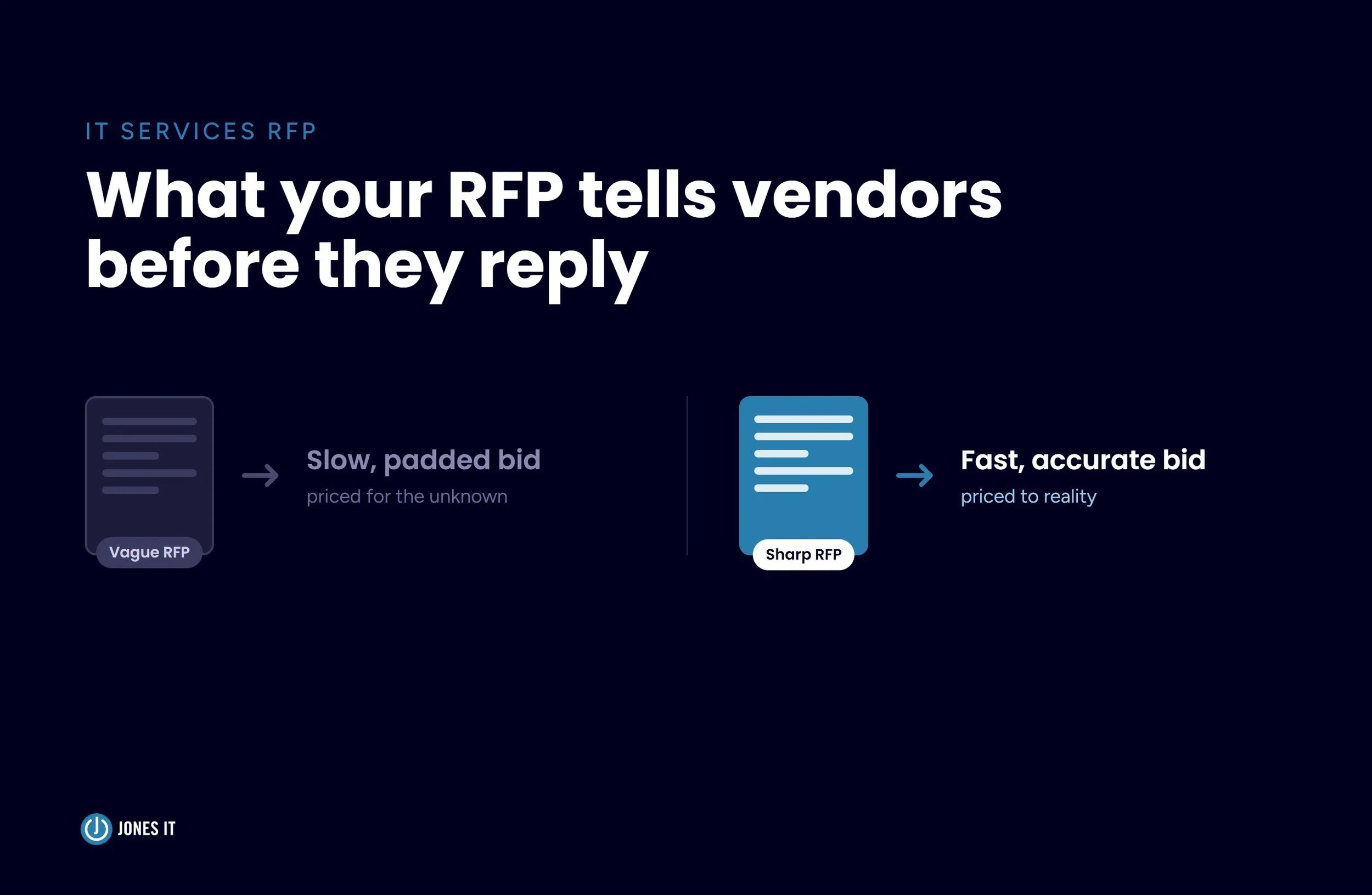
Start with an honest inventory of your current environment. Document every device, application, and system in use. Map where your data actually lives: on-premises servers, cloud platforms, employee laptops. Categorize software by criticality. This exercise gives any prospective MSP what they need to scope the work accurately and price it fairly. Without it, you will face billing surprises and a longer, messier onboarding.
Beyond the inventory, define what success looks like. Are you trying to reduce IT spending by a specific percentage? Do you need 24/7 coverage or are business hours sufficient? Are you working toward SOC 2, ISO 27001, or HIPAA compliance? Is a cloud migration on the horizon?
Understanding the full cost structure and ROI of managed IT services helps you select a partner aligned with your financial goals and gives you the benchmarks to measure value later.
Cultural fit matters more than most leaders expect. Technical capability is table stakes. A mismatch in communication style will erode the relationship regardless of how good the technology is. Some companies want detailed technical updates at every turn; others want a high-level summary and to be left alone. Be honest about which you are.
If you plan to keep internal IT staff alongside your MSP, co-managed services require clear boundaries from day one. If you want full delegation, fully managed services provide end-to-end ownership with minimal internal involvement.
Have the scalability conversation early. Your business will not stay the same size, and an MSP should have documented, repeatable processes for adding users, provisioning devices, and expanding infrastructure. For startups especially, headcount and technology needs can change faster than most vendors are built to accommodate, so this question deserves a real answer, not a vague reassurance.

2. Eliminate Ambiguity: Define Roles and Responsibilities in Your MSP Partnership
The phrase most commonly heard in struggling MSP partnerships is some version of "I thought you were handling that." It is entirely preventable, and preventing it starts with a detailed Scope of Work that explicitly assigns ownership for every IT function.
Your documentation should make three categories clear. Your MSP owns 24/7 monitoring and alerting, patch management, helpdesk support, cybersecurity monitoring and incident response, backup management, and vendor coordination. Your organization retains strategic technology planning, budget decisions, business process requirements, physical security, and compliance policy decisions.
The middle category is where most partnership friction originates: new software evaluation, major infrastructure changes, business continuity planning. Both parties have a stake, and coordination is required. Leave it undefined and "I thought you were handling that" becomes a recurring conversation.
You also need specifics on how support actually works. Will your MSP have on-site technicians, or is everything remote? What are the response time expectations for different severity levels? What counts as an emergency?
For co-managed environments, add formal change notification protocols. Internal teams must notify the MSP before making infrastructure changes; the MSP must communicate planned maintenance in advance. Both sides should maintain a shared change calendar with documented emergency bypass procedures. Without this, teams work at cross-purposes, and the first sign is usually a security vulnerability or an outage that nobody saw coming.
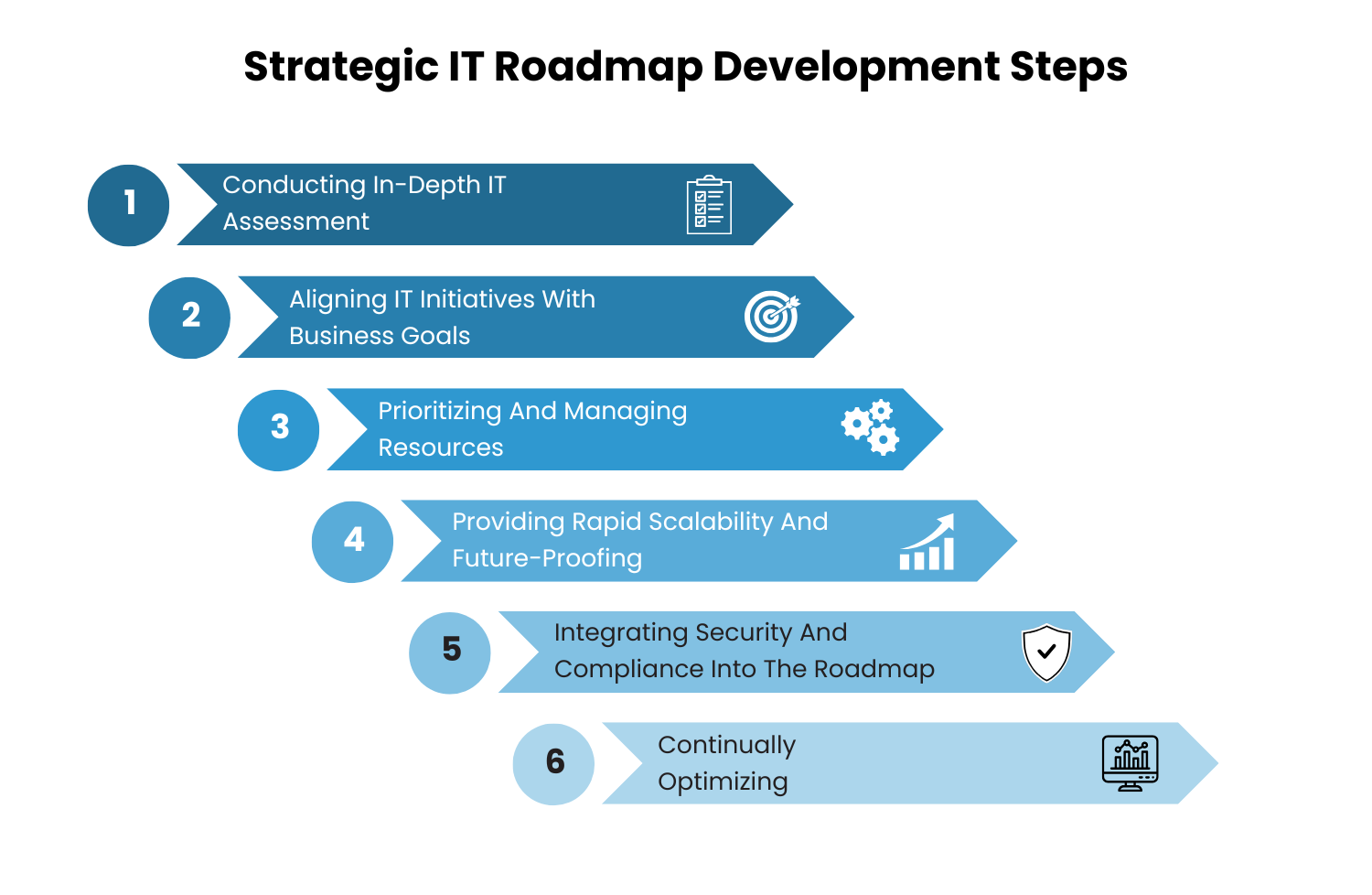
3. Transition Well: How You Start the MSP Partnership Shapes Everything That Follows
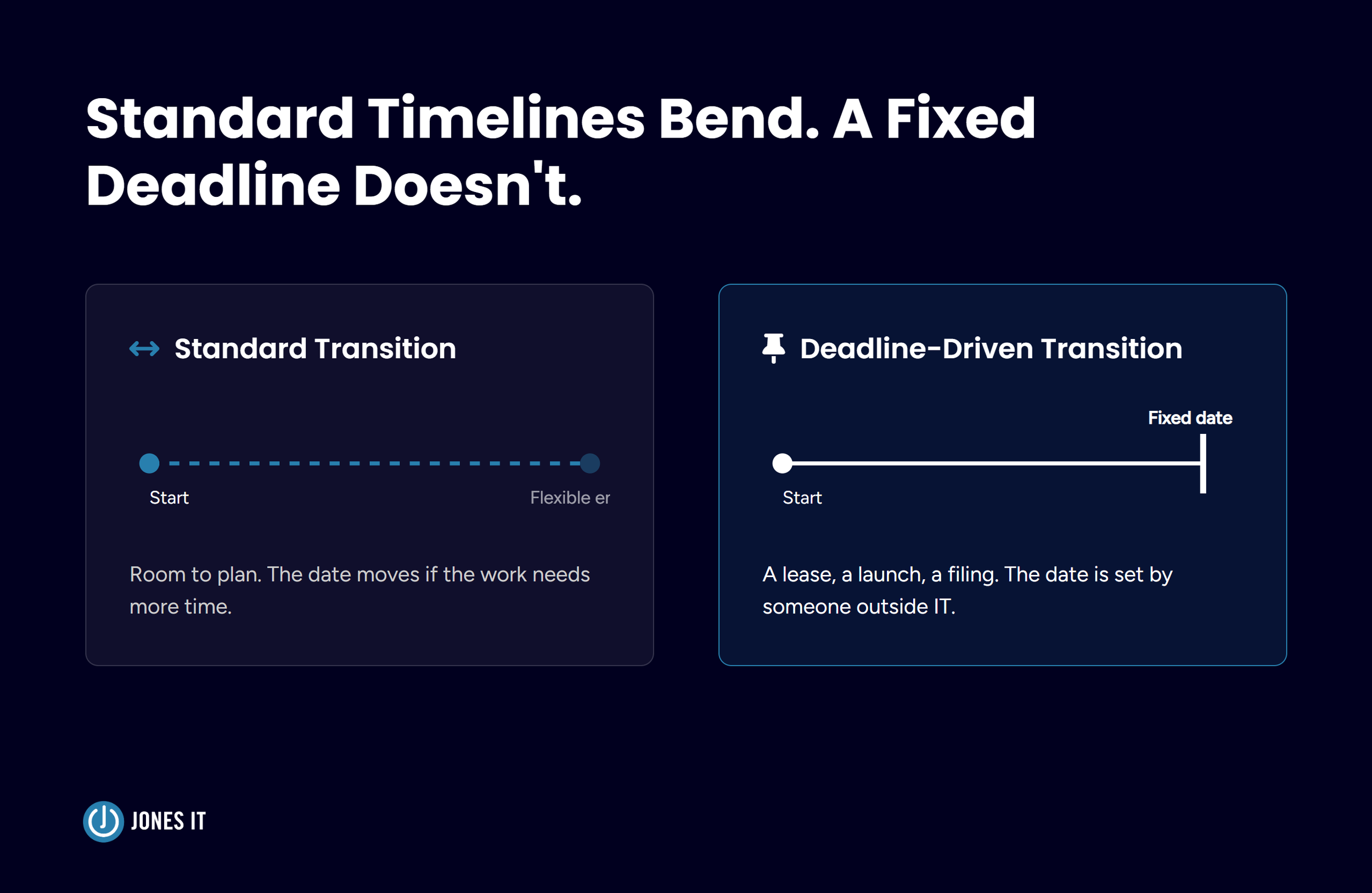
How you transition to your MSP sets the tone for the relationship. The temptation to switch everything at once is understandable; it feels decisive. In practice, it is a reliable path to downtime, undocumented systems surfacing at the worst possible moment, and an MSP team scrambling to understand an environment they have barely been introduced to.
A phased approach works better. Spend the first two weeks in a dual-run period where both the outgoing arrangement and the new MSP operate in parallel. This is when you will catch the documentation gaps nobody knew existed. Weeks three and four focus on gradual handoff, starting with lower-risk systems. By weeks five and six, you complete the transition with heightened monitoring in place. A structured, step-by-step approach is the path of least resistance to a stable, high-performing partnership.
Tool integration deserves particular attention. Simply handing over logins to existing systems creates security risks and workflow friction. The goal is genuine integration: the MSP ticketing system should connect with your internal tools like Slack or Teams so employees can raise tickets through familiar interfaces. Access should be provisioned through identity management platforms with SSO, not shared passwords, which eliminates a class of security risk and creates audit trails of all MSP activity.
Employee onboarding and offboarding is another area where documentation pays dividends. When a new hire joins, the IT process should be automatic: technology needs assessed, accounts provisioned, equipment delivered and configured, security training scheduled. When someone leaves, the offboarding checklist should execute without improvisation. Standardized processes here reduce burden on HR and ensure nothing slips through.
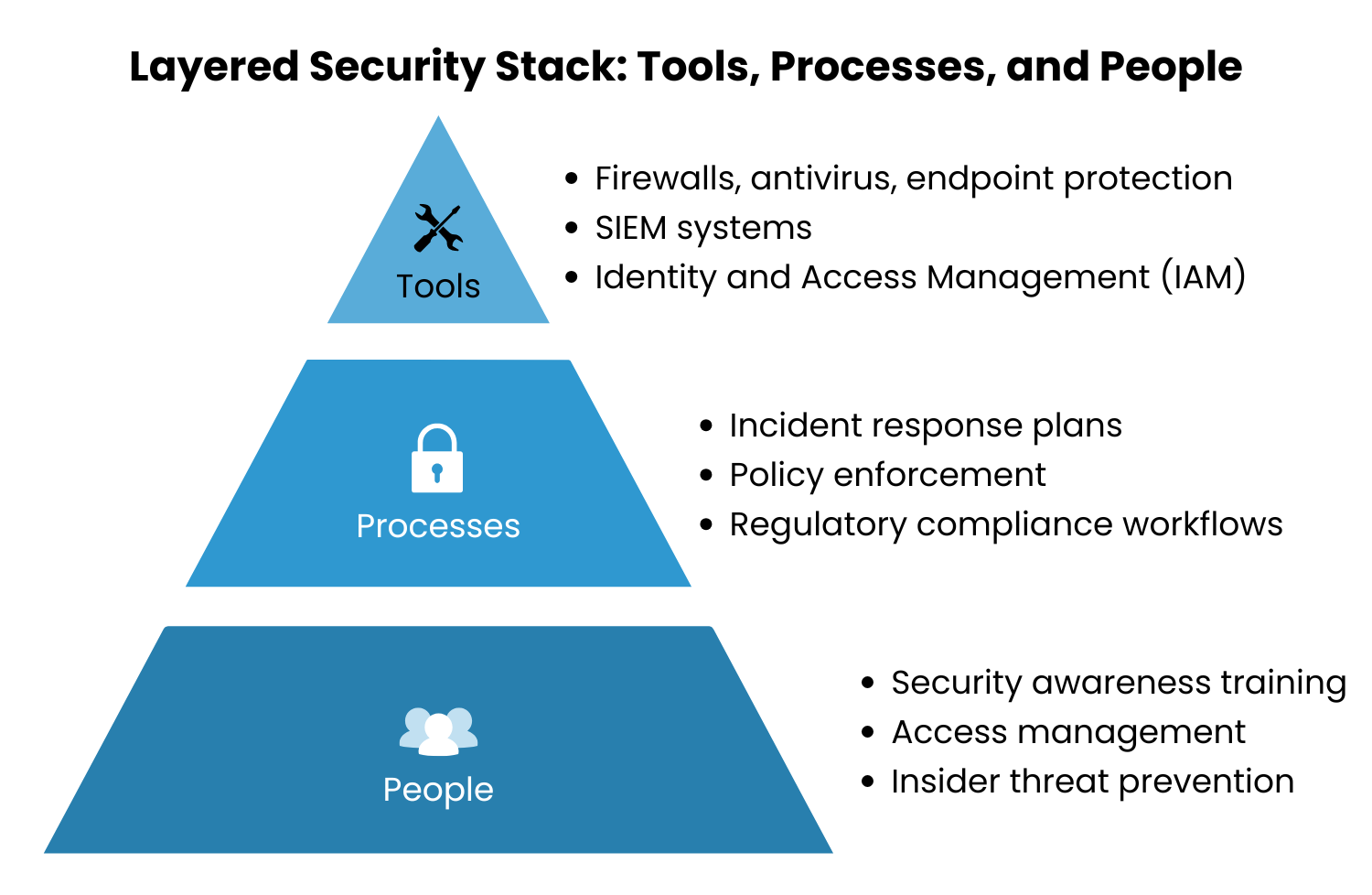
4. Treat Security and Technology Strategy as Core MSP Partnership Deliverables
Security is a fundamental component of any modern MSP relationship, and organizations that treat it as secondary consistently face higher breach risk and more painful compliance challenges.
Every MSP partnership should include a non-negotiable baseline of security controls. Next-generation firewall management, including intrusion prevention and detailed logging, is table stakes. Endpoint Detection and Response (EDR) on every device provides real-time threat detection, automated response to suspicious activity, and forensic capabilities for incident investigation. Multi-Factor Authentication (MFA) should be required for all administrative access and strongly recommended for all user accounts.
Technology controls are only half the picture. Human error accounts for 95% of security breaches, which means your people are either your biggest vulnerability or your strongest line of defense, depending on how well they are trained. An MSP worth its fees will deliver monthly security awareness modules, simulated phishing campaigns with remedial training for anyone who clicks, and role-specific training for employees who handle sensitive data. New hires should complete security onboarding within their first week.
The most valuable element of a mature MSP partnership is a shared technology roadmap. Annual planning sessions should review how regulatory requirements will affect your business, assess infrastructure replacement timelines, identify technologies that could create competitive advantage, and plan compliance certification work. MSPs with genuine depth help you anticipate technology challenges before they become crises, shifting IT from reactive to strategic.
5. Measure MSP Partnership Value with the Right Performance Framework
What gets measured gets managed. Without structured oversight, even good MSPs drift from original commitments over time, not out of bad faith, but because competing priorities fill the vacuum that vague accountability creates.
Service Level Agreements (SLAs)
SLAs are contractual commitments: response times by severity level (typically 15 minutes for critical issues, one hour for high, four hours for medium, 24 hours for low), resolution time targets, system uptime guarantees of 99.5% to 99.9%, and financial penalties or service credits for violations.
Key Performance Indicators (KPIs)
KPIs measure operational excellence rather than contractual compliance. First Contact Resolution Rate should be 75% or higher. Mean Time to Resolution should be tracked by issue category to surface patterns. Ticket volume trends matter: a steady rise often signals an underlying systemic problem, not just a busy month. User Satisfaction Scores through post-ticket surveys give you ground truth on whether people are actually being helped. Track metrics monthly, but in quarterly reviews focus on trends rather than point-in-time data.
Quarterly Business Reviews (QBRs)
The most common mistake is treating QBRs as data-dump sessions: 45 minutes of slides showing that SLAs were met, followed by a polite handshake. The better model allocates roughly 30% of the meeting to performance review, 50% to strategic discussion (upcoming business changes, technology roadmap progress, security posture), and 20% to concrete action planning with assigned owners and timelines. QBRs should involve business leaders, not just IT staff.
Billing transparency matters too. Disputes over invoices are one of the most common reasons MSP relationships deteriorate. Require itemized invoices with accurate time entries and clear descriptions, budget alerts before you approach usage thresholds, and easy access to historical spending data. Understanding your MSP pricing model from the start prevents the surprise charges that erode trust faster than almost anything else.
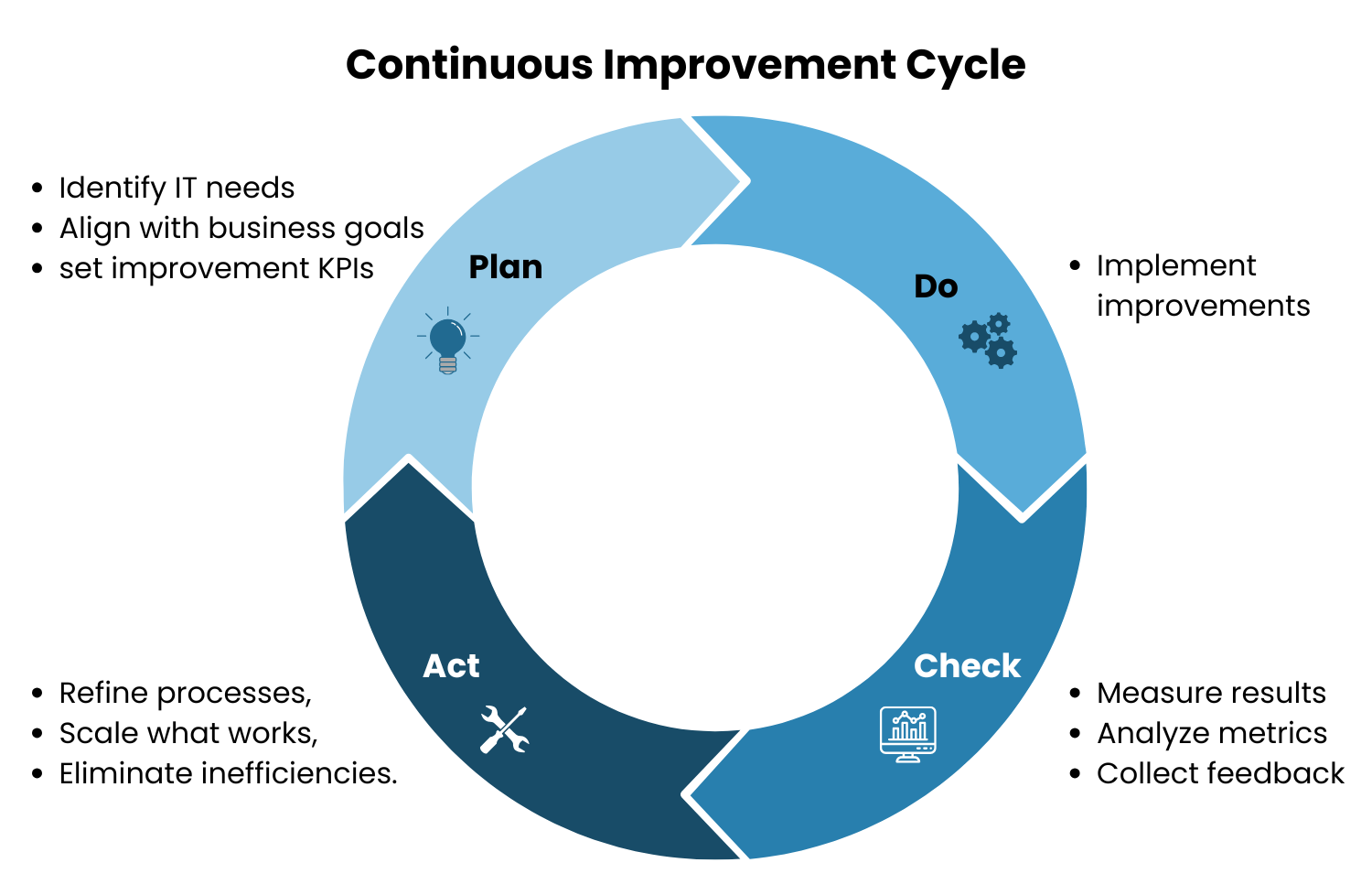
6. Build Continuous Improvement into the Partnership
A static partnership becomes an obsolete partnership. Business needs evolve, the technology landscape shifts, and the capabilities you needed from an MSP two years ago may not be the same ones you need now.
The formal feedback infrastructure matters. Beyond QBRs, monthly operational calls with your account manager and bi-weekly ticket reviews help surface recurring issues before they escalate. Quarterly pulse surveys across the organization reveal broader patterns that ticket data alone will not show.
Pay close attention to the end-user experience, because technical metrics can tell a misleading story. An MSP can meet every SLA on paper while users are quietly frustrated by slow responses or repeated interactions needed to resolve the same type of issue. If tickets consistently require multiple touchpoints to close, something is broken in the resolution process. If self-service adoption is low, the knowledge base is not serving its purpose.
Every two to three years, conduct a formal partnership assessment. The honest questions: Is the MSP keeping pace with your business growth? Are you receiving proactive strategic recommendations or just reactive support? Has the relationship become transactional? Are emerging technologies being brought to you, or are you discovering them on your own? Knowing when a partnership has run its course is as important as selecting the right provider. If a change is warranted, switching with a clear plan protects continuity.
Turning Your MSP Partnership into a Competitive Advantage
The biotech VP we mentioned at the start eventually switched to Jones IT. Right at the start of our partnership, we defined roles, created a shared technology roadmap, and set up quarterly strategic reviews that included his leadership team. Within a year his company passed its SOC 2 audit and scaled its IT infrastructure through a 40-person hiring push without a single major disruption. That is what a well-structured managed IT services partnership actually looks like.
The companies that get the most from their MSP share a set of habits: technology decisions anchored to business objectives, roles that leave no room for ambiguity, performance tracked against metrics that matter, and a relationship that evolves as the business does. When those conditions are in place, IT stops feeling like overhead.
At Jones IT, we have spent over 20 years helping Bay Area companies build MSP partnerships that deliver measurable business value. If you want to talk through how your current arrangement is working or what a more structured partnership could look like, we would be glad to have that conversation.
Contact us today to schedule a strategic IT assessment and discover how the right partnership approach can turn technology into your competitive advantage.
About The Author

Hari SubediMarketing Manager at Jones IT
Hari is an online marketing professional with a focus on content marketing. He writes on topics related to IT, Security, and Small Business. He is also the founder and managing director of Girivar Kft., a business services company located in Budapest, Hungary.

Learn to build an IT investment business case that gets approved. We show you how to prove the cost of waiting vs. the cost of acting to win CFO buy-in.