
Maintaining SOC 2 Compliance: How to Avoid the Post-Audit Gap
Key Takeaways
Avoid the "Q3 Gap": Don't let your compliance rhythm slip after your audit; documentation integrity is just as important as the controls themselves, and auditors can easily spot retrospective "cleanup."
SOC 2 is a Habit, Not a Snapshot: Shift from "audit prep" to a continuous cadence by establishing clear, recurring ownership for daily, weekly, and quarterly controls.
Automate to Save Costs: Treat compliance automation as a year-one prerequisite rather than optional overhead to avoid the "double cost" of reconstructing evidence manually after a control has gone dormant.
The Day the Report Landed, and What Happened Next
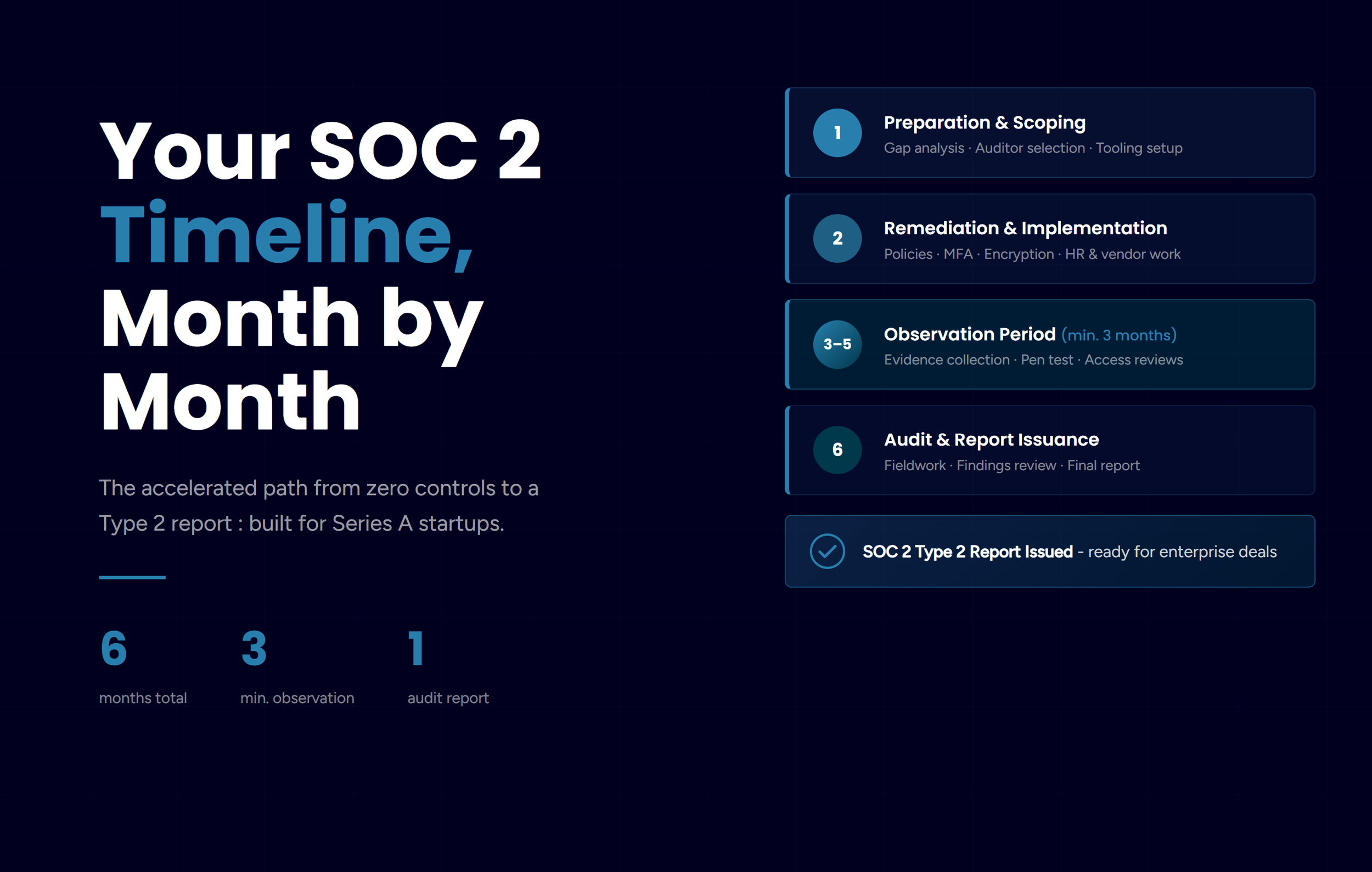
We worked with a Series A fintech startup last year that did everything right on the way to their first SOC 2 Type 2 report. Quarterly access reviews landed on time. Evidence collected cleanly through their automation platform. The auditor's fieldwork wrapped up in under three weeks, and the final report came back with zero exceptions. The team celebrated, and they'd earned it.
Here's what happened next. Q1 stayed sharp. The access review calendar reminder fired, someone reviewed permissions, and someone signed off. Q2 looked the same. Then Q3 arrived in the middle of a product launch, a headcount push, and the access review slipped by two weeks, and then three. Eventually, someone circled back to it, the review got done, but it got backdated in the ticketing system to look timely. Nobody meant any harm by it. They just didn't want the gap to show.
The access review gap showed anyway. When the renewal auditor pulled the version history on that ticket during the next observation period, the timestamps didn't match the approval date. That's not a control failure so much as it's a documentation integrity problem. However, auditors treat it as exactly what it looks like: a review that didn't happen when it was supposed to. We call this the Q3 Gap, and once you've seen it once, you start seeing it everywhere. That single exception followed them into their renewal report, and it was the first thing their next enterprise prospect's security team flagged during procurement review.
Why Maintaining SOC 2 Compliance Starts the Day Your Audit Ends
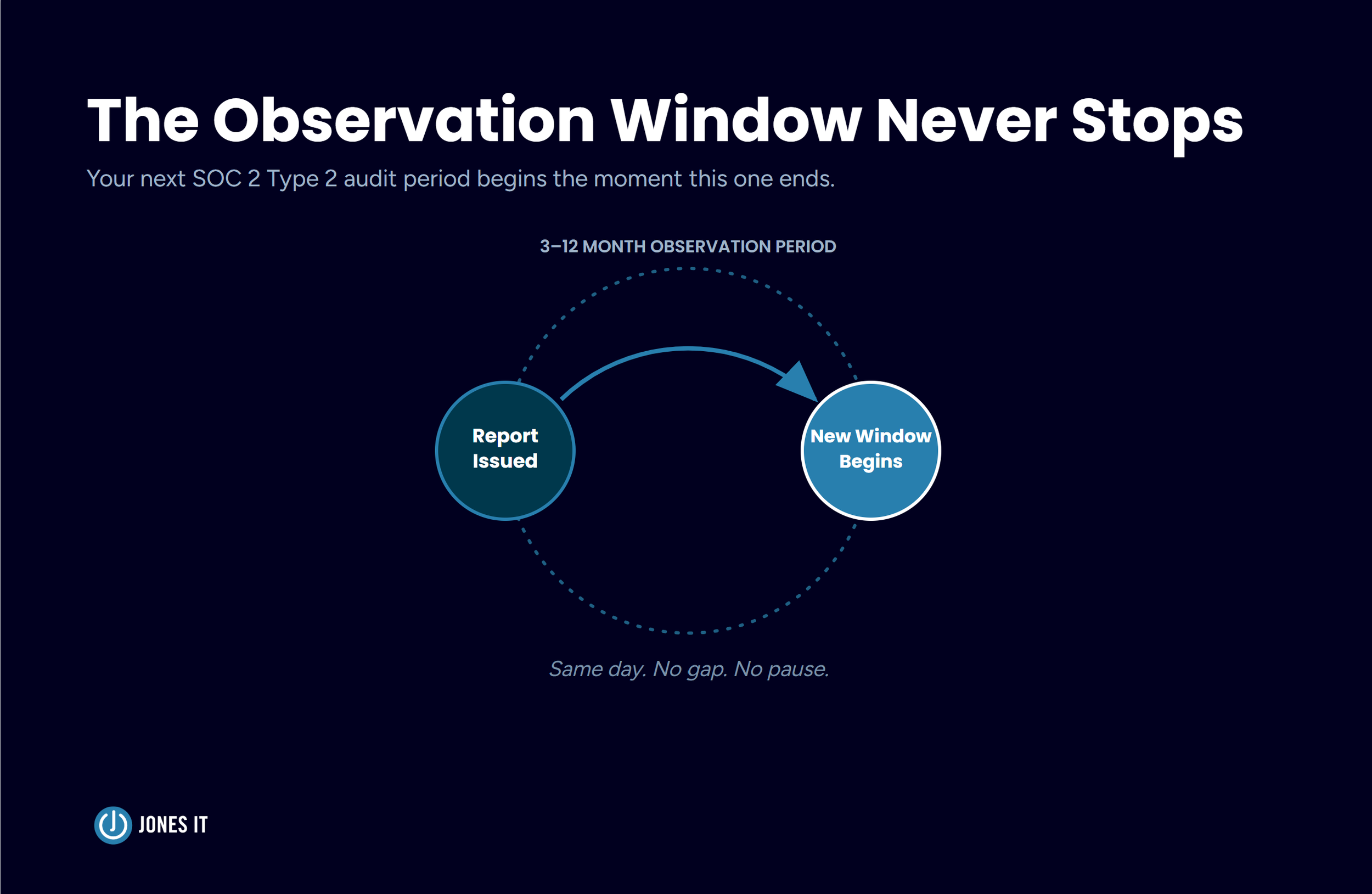
The observation window for your next SOC 2 Type 2 report begins the moment your current one is issued. That's not a metaphor. If a control lapses on day one of the new window, you've already banked an audit exception that won't surface until the report a year later, at which point it's too late to fix retroactively.
This is the part that trips up most first-time SOC 2 companies. A Type 2 report certifies operating effectiveness over a historical period, typically an observation window of three to twelve months, which means the report you're holding right now is already backward-looking. Your auditors weren't grading a snapshot. They were grading a habit. And the habit either continues or it doesn't.
When controls go dormant between audit cycles, rebuilding the program for the next one doesn't cost the same as building it the first time. It costs roughly double, because now you're reconstructing evidence for a period that's already passed instead of just having captured it as it happened. We've watched companies learn this the expensive way.
The Continuous SOC 2 Compliance Calendar: Daily to Annual Controls
Contemporaneous evidence is proof that a control ran when it was supposed to, not a reconstruction assembled months later, once someone remembered. Auditors expect exactly that standard, and it only gets met with a real cadence, not a mental note to “stay on top of things.”
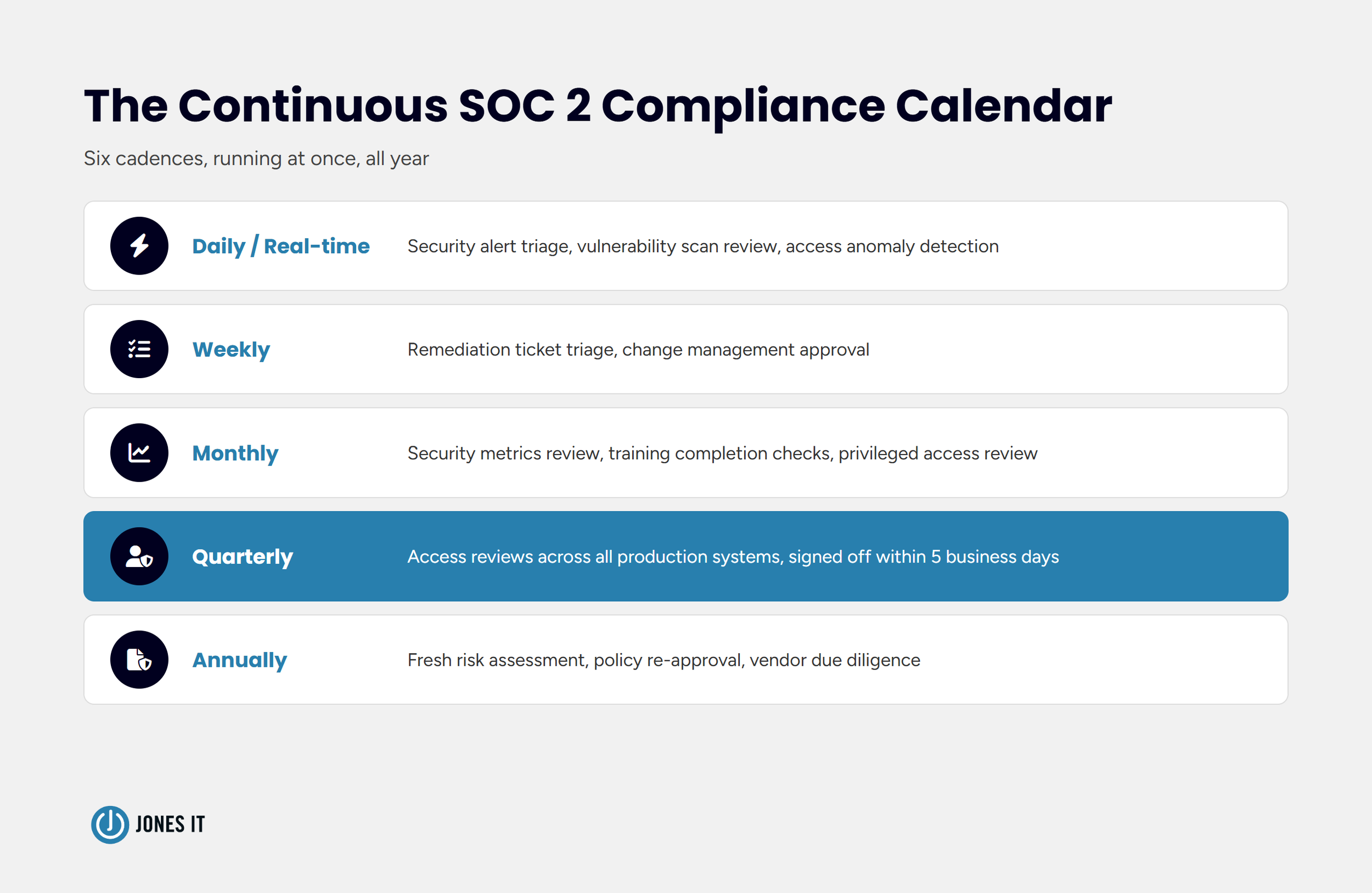
Here's the minimum operational rhythm we recommend to every client in their first year:
| Frequency | Control Activity | Evidence Generated |
|---|---|---|
| Daily / Real-time | Security alert triage, vulnerability scan review, and access anomaly detection. | Alert disposition logs, investigation notes, and automated monitoring captures. |
| Weekly | Remediation ticket triage, change management approval. | Updated ticket status, timestamped change approval records. |
| Monthly | Security metrics review, training completion checks, and privileged access review. | Metrics dashboards, training completion reports, and monthly access logs. |
| Quarterly | Access reviews across all production systems. | Review records signed off by system owners within five business days. |
| Annually | Risk assessment, policy adjustments + re-approval, vendor due diligence, penetration testing, BCP tabletop exercises. | Updated risk register, timestamped policy approvals, and vendor SOC 2 review logs. Pentest reports, tabletop minutes, and action items. |
That five-business-day window on quarterly access reviews isn't arbitrary. It's the difference between a review that reads as routine and one that reads as retrospective cleanup, which is exactly the distinction an auditor is trained to catch.
SOC 2 Access Reviews and the Q3 Gap
Access management is the most commonly failed SOC 2 control, and it usually fails for a psychological reason rather than a technical one. Teams stay sharp in Q1 because the last audit is fresh. Q2 holds because the rhythm is still new. Then Q3 hits during a busy quarter, priorities shift, and the review gets pushed. By Q4, someone's scrambling to catch up before year-end, and the scramble is exactly what shows up as a gap in the audit trail.
A compliant access review isn't complicated in principle. Identify every sensitive data store and critical system. Map who has access to what. Validate each permission against the person's current role. The standard is least privilege, in which access matches what the job requires now, not what has accumulated over time. While the mechanics are simple, sticking to the calendar is the actual challenge.
Offboarding deserves its own attention here, especially for remote-first teams. Revoke access within 24 hours of departure, retrieve or dispose of shared equipment, and rotate any credentials the departing employee shared with others. A departed employee with lingering access isn't a hypothetical risk. It's the kind of finding that shows up in almost every access review an auditor has ever conducted.
How Automation Supports Continuous SOC 2 Compliance
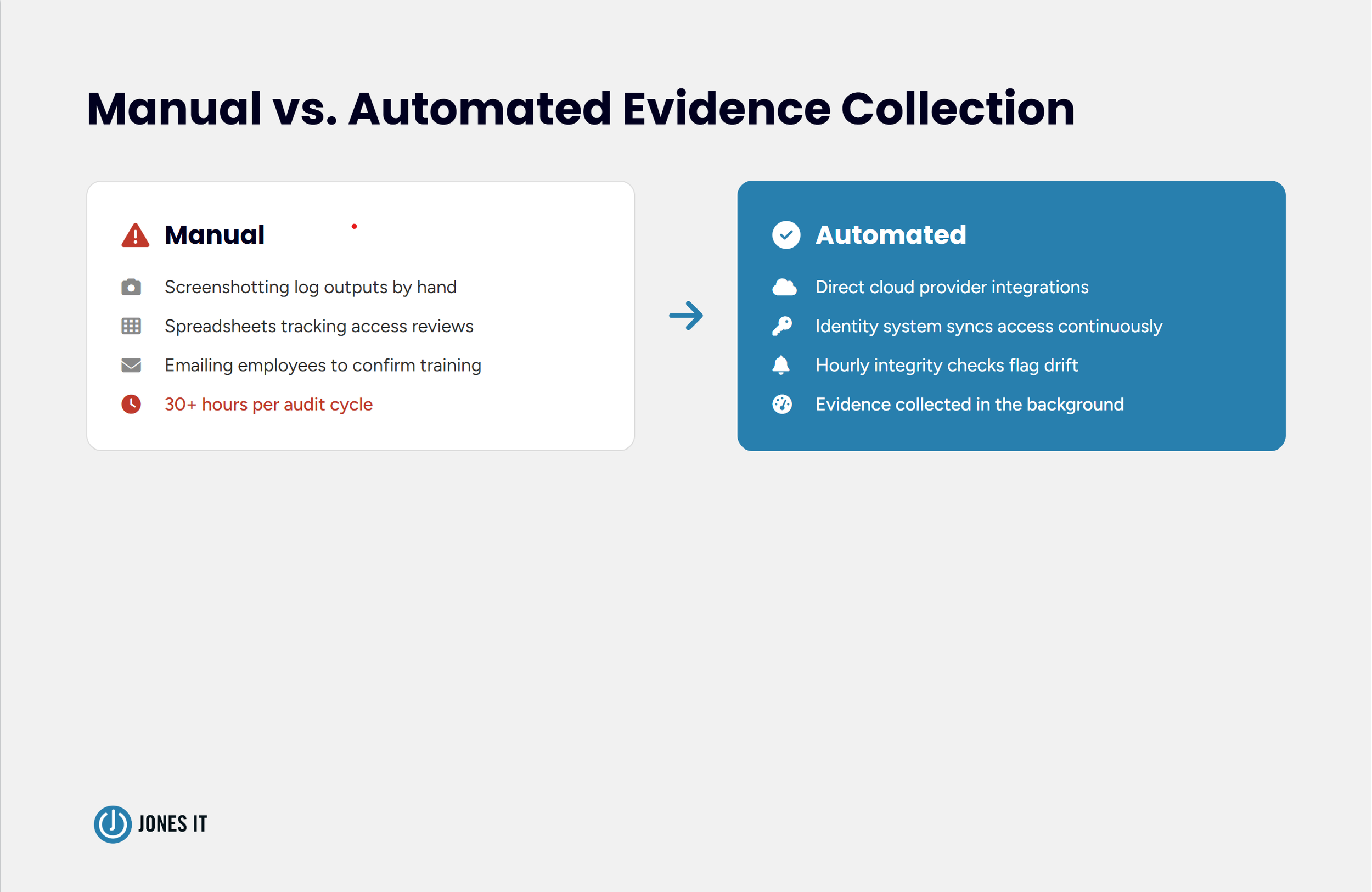
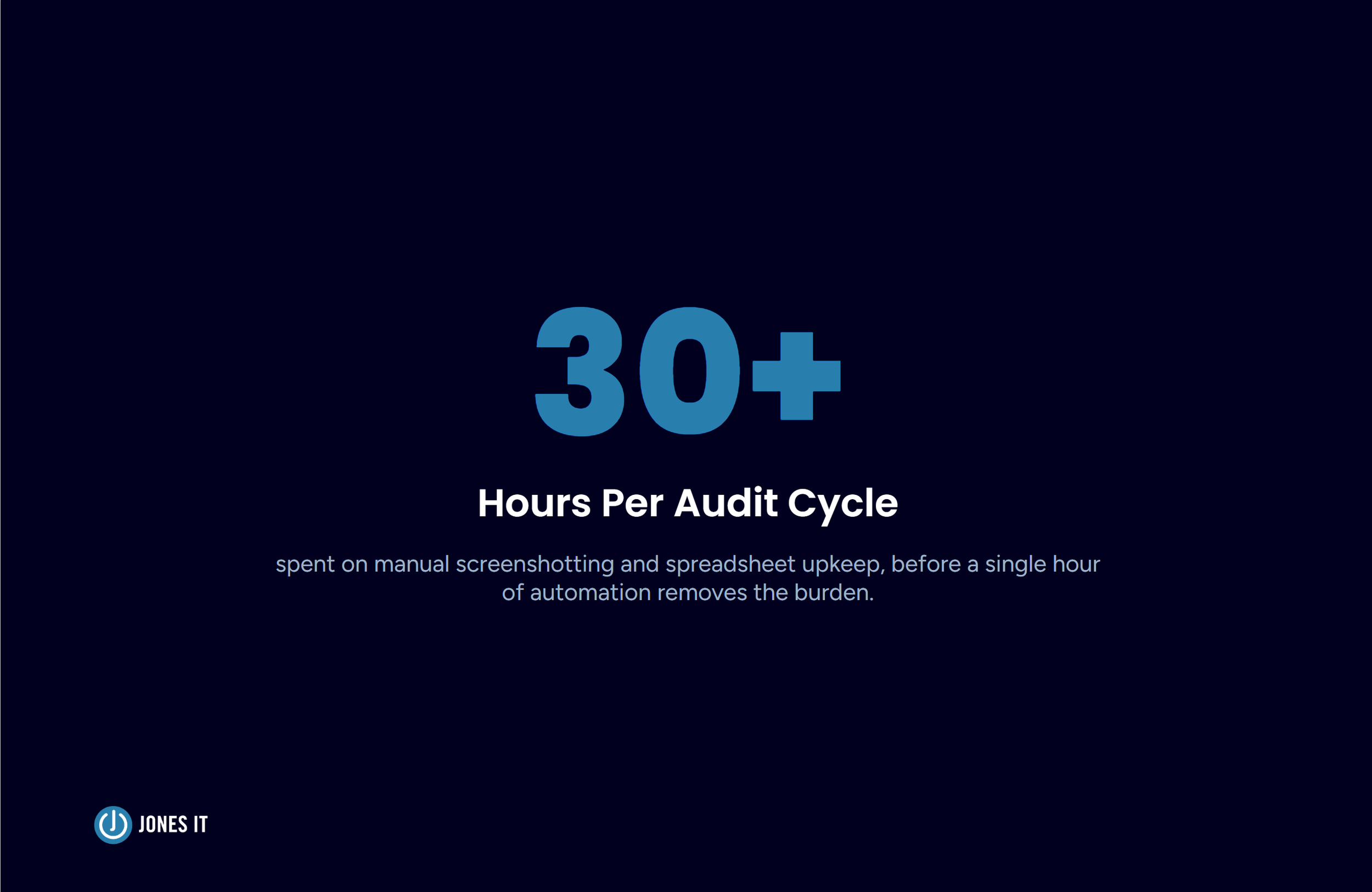
A compliance automation platform closes the gap between “the control exists” and “the control ran on schedule” by collecting evidence continuously instead of on a calendar someone has to remember. That matters because manual evidence collection can eat 30 or more hours per audit cycle in pure screenshotting, and that number understates the real cost. It doesn't count the hours lost when a screenshot goes missing, or a spreadsheet falls out of date, and nobody notices until the auditor asks for it.
I'll say this plainly, because it's the one place in this post where I want to push back on how founders usually think about the tradeoff: treating a compliance automation platform as optional overhead is the single most common mistake we see in year two. Direct integrations with your cloud provider, identity system, and ticketing tools turn evidence collection into something that happens continuously in the background instead of something someone has to remember to do. Hourly integrity checks catch control drift, like an S3 bucket that quietly turned public, before it becomes a finding instead of after.
We saw this play out with a healthtech client last year. A contractor's cloud access key stayed active five days past their contract end date, invisible to anyone until the quarterly access review would have caught it weeks later. Instead, an hourly integrity check flagged the anomaly the same afternoon it appeared, and the access was pulled before the end of the day. Without that check, the gap would have sat open for over two months, and the company wouldn't have known until they went looking.
Linking your HR system to your identity provider closes one of the most common gaps we see: an employee's termination in the HRIS should trigger deprovisioning automatically, not through a Friday afternoon Slack message that someone might miss. The goal isn't to remove humans from the process. Rather, it's to make sure the process doesn't depend entirely on someone's memory during a busy week.
SOC 2 Vendor Risk Review (CC9): What Renewal Actually Requires
Common Criteria 9 covers vendor and third-party risk, and it's the section of the Trust Services Criteria that founders remember least between audits, mostly because it doesn't touch day-to-day engineering work the way access controls or vulnerability management do.
Auditors expect annual due diligence on your high-risk vendors, which means collecting and reviewing their SOC 2 reports to check for subservice organization exceptions (gaps in a vendor's own controls that could become gaps in yours) that could carry through into your own control environment. If a vendor doesn't have a SOC 2 report of their own, a security questionnaire or a review of their contractual security commitments has to fill that gap, along with a documented management assertion that you've assessed the risk and accepted it knowingly rather than by default.
The renewal scramble usually happens here because CC9 work has no natural trigger. Nobody notices a vendor review is overdue the way they notice an access review reminder firing in their inbox. Building it into the annual calendar, tied to a fixed month rather than a vague “sometime this year,” is the only fix that actually holds. Additionally, some vendors take days to weeks to get back to you with their latest report. This delay needs to be expected and worked into your review rhythm, so you’re not scrambling to urgently request for reports right before audit.
One of our clients ran into exactly this during a routine CC9 review. Their primary logging vendor's own SOC 2 report carried a noted exception around incident response times, a detail that would have been easy to skim past. Instead, it triggered a follow-up call with the vendor and a documented risk acceptance memo, filed months before their own audit began. Finding it on their own timeline meant it read as due diligence. Finding it during the audit itself would have read as a gap.
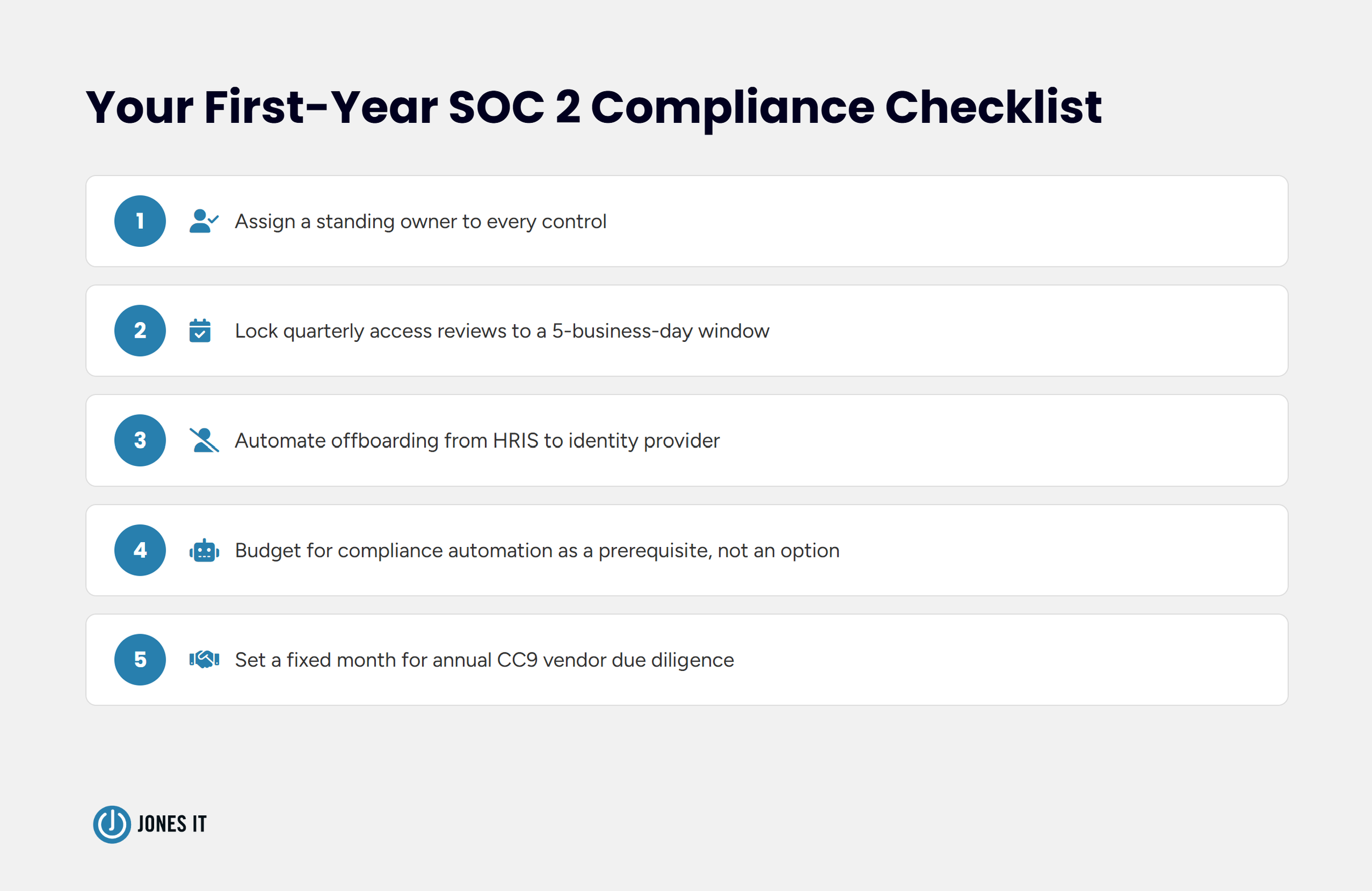
Your First-Year SOC 2 Compliance Checklist
If you're six months out from your first Type 2 report, or you just received one and want to keep it, here's where to start:
Assign a standing owner to every control. Ownership that ends when the audit ends is the root cause behind most of what breaks in year two.
Put the quarterly access review on a calendar with a hard five-business-day completion window, not a soft reminder someone can snooze.
Automate offboarding through an HRIS-to-identity-provider integration so access revocation doesn't depend on someone remembering to send the Slack message.
Budget for a compliance automation platform as a prerequisite, not a nice-to-have, you'll evaluate after the first audit.
Set a fixed month for annual vendor due diligence under CC9, since this is the review most likely to get forgotten entirely.
Refresh your risk assessment whenever the environment changes materially. Don't let it default to a once-a-year formality.
Keep your System Description current as your team, tools, or architecture shift, since it's the narrative an auditor reads before they read anything else.
We covered the tooling side of this in more depth in our post on SOC 2 compliance tools and security stack, and if you're still deciding between report types before any of this applies to you, our breakdown of SOC 2 Type 1 vs Type 2 covers that decision in full.
Getting Through Year One
Getting the SOC 2 report is the part everyone plans for. Keeping it is the part that quietly determines whether your second audit costs the same as your first or twice as much. We've been through our own SOC 2 Type 2 journey, mistakes included, and wrote up what we'd do differently in The Real Story of Achieving SOC 2 Compliance. The short version applies here too: a control that only runs during audit prep isn't protecting anything. It's just a performance for the auditor, and the auditor can tell the difference.
If you're heading into your first year post-certification and want help building a cadence that actually holds, reach out to us. We'll help you figure out where the gaps are likely to open before they do.


Wondering how to maintain SOC 2 compliance after your first audit? Learn the essential year-one cadence, avoid the "Q3 Gap," and keep your certification stress-free.