
TL;DR
A vCIO is a part-time technology executive who owns IT strategy, budget, and roadmap planning, without a full-time hire or salary.
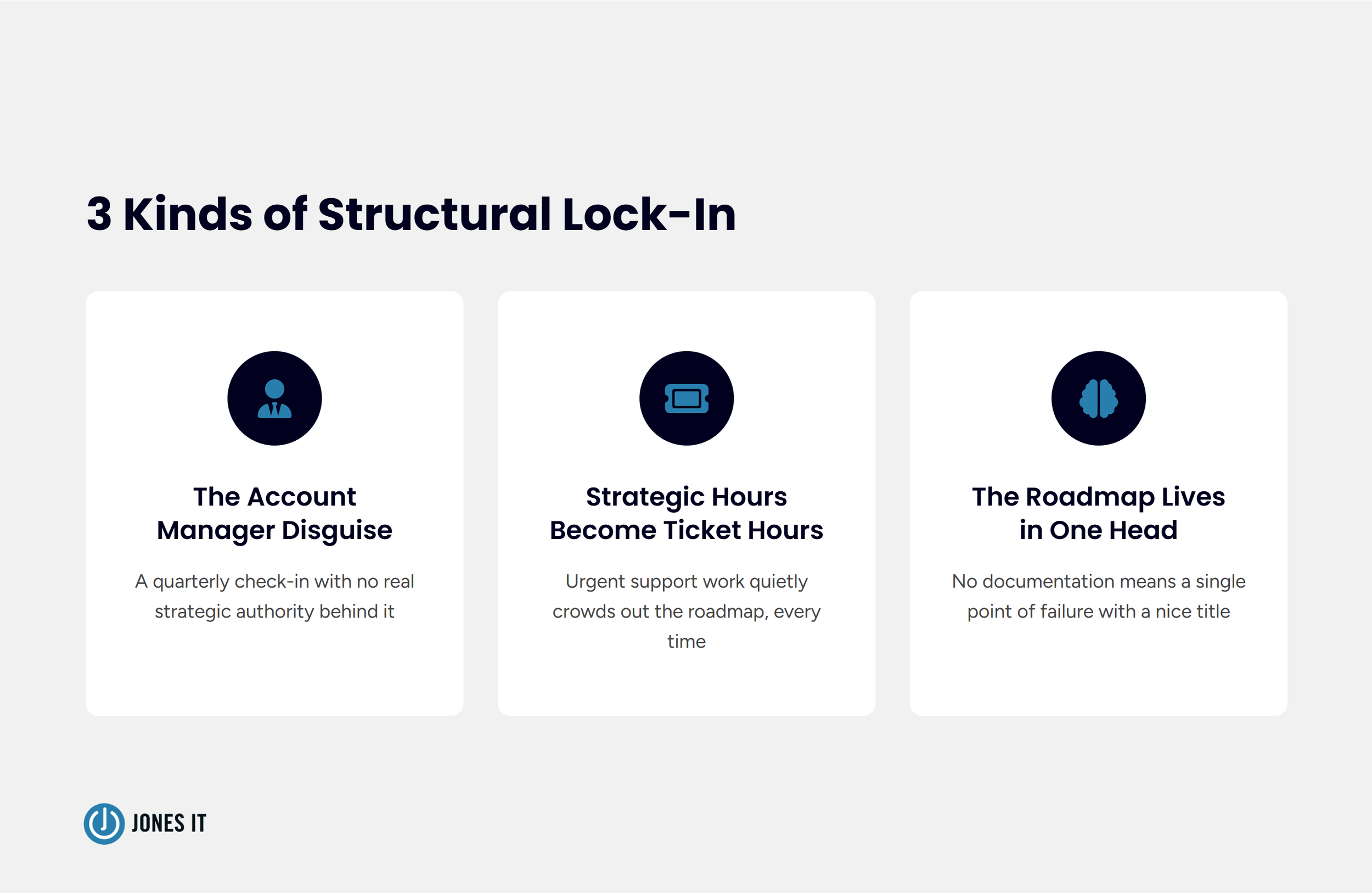
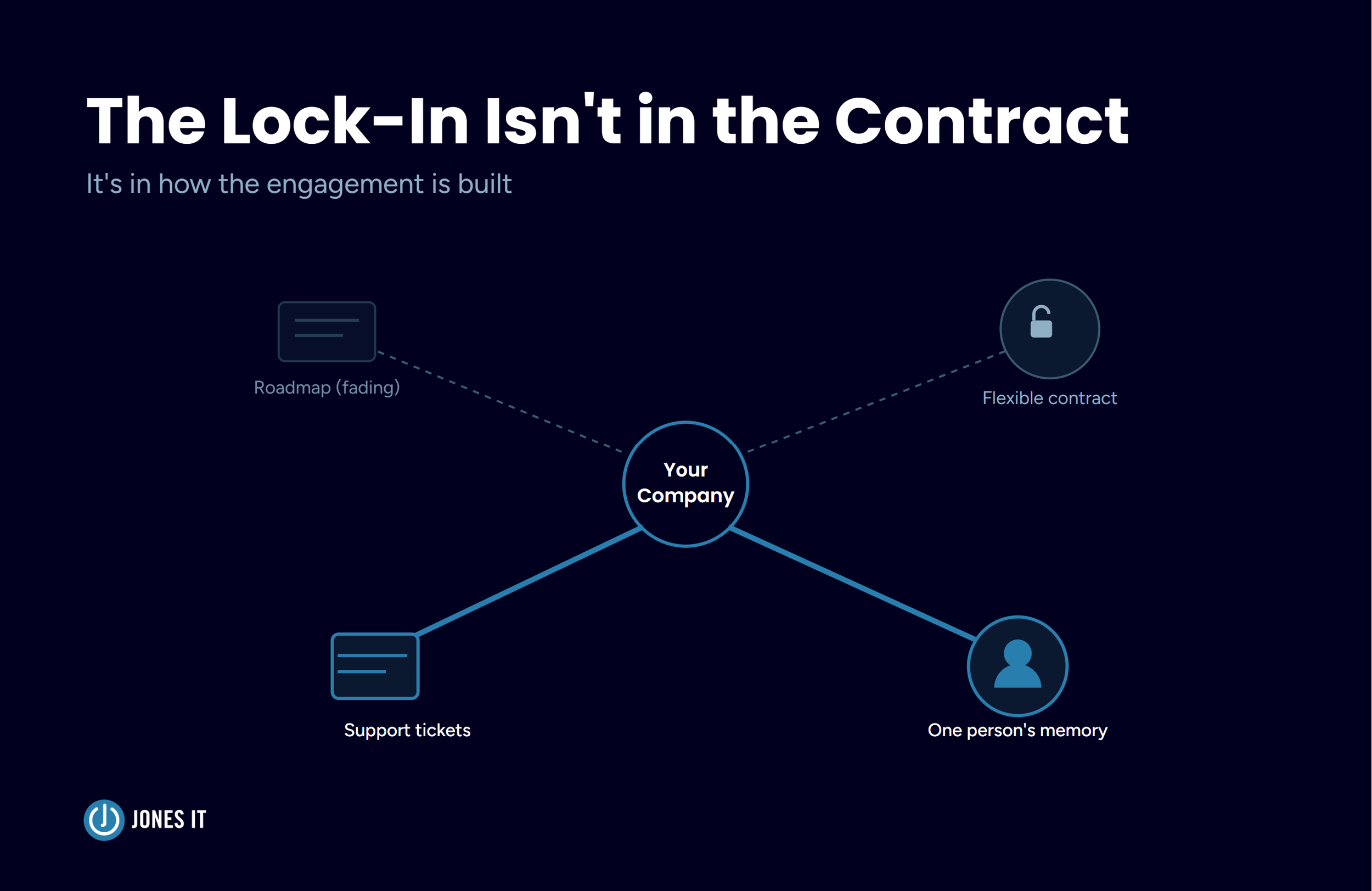
The real lock-in risk with a vCIO isn't the contract. It's structural: a vCIO who's really an account manager, strategic hours that get eaten by support tickets, or a roadmap that only exists in one person's head.
A vCIO and a fractional CIO describe nearly the same role. A vCISO is a different, security-specific role.
Ask who's doing the work, get a documented roadmap as a deliverable, and confirm strategic hours are protected from support triage before signing.
Most founders assume that the biggest risk with a vCIO engagement is the contract. They're wrong. The real risk is structural.
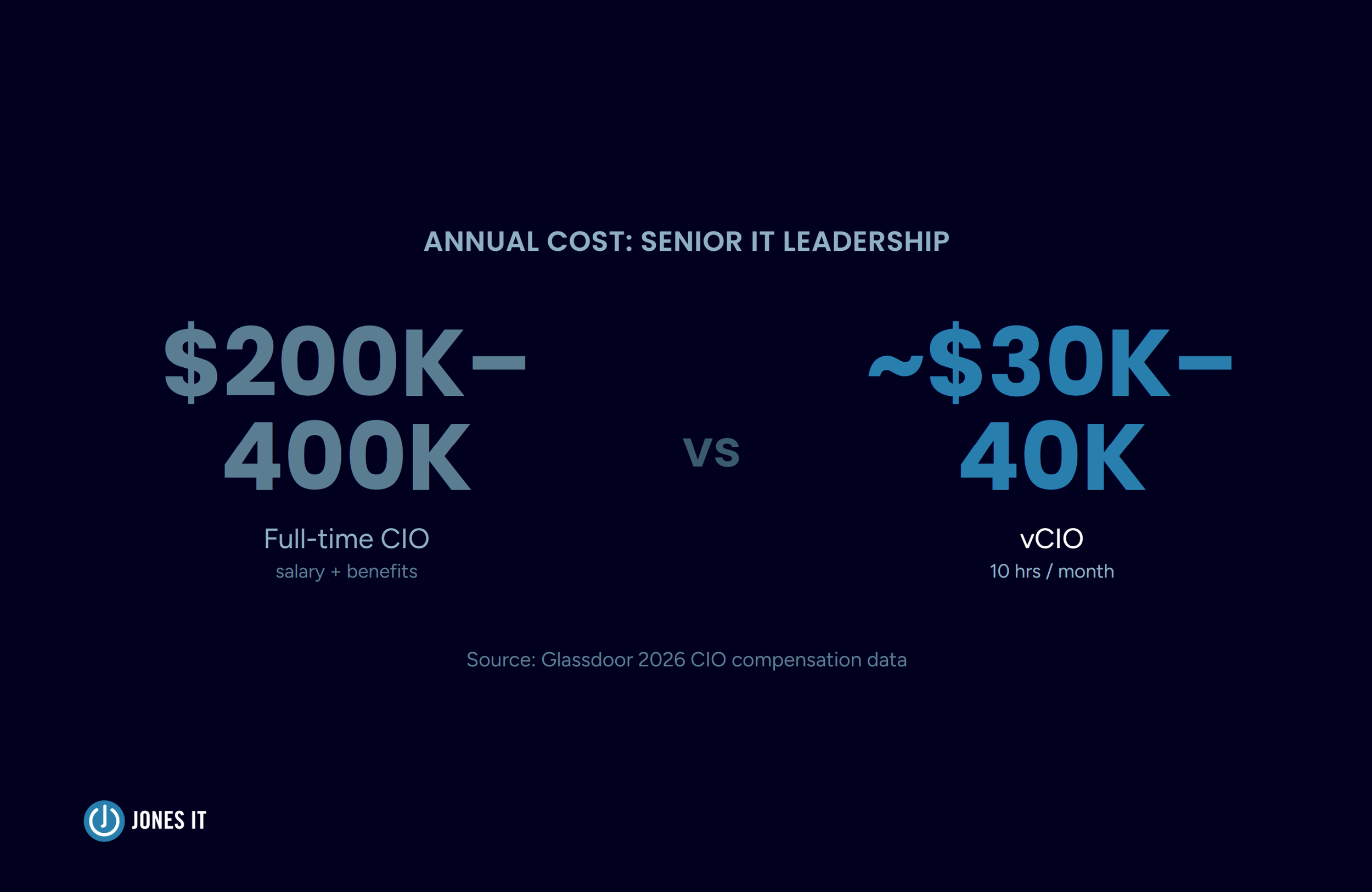
On paper, a vCIO sets the IT strategy, owns the roadmap, and represents technology in leadership conversations, without joining as a full-time hire. The pitch is senior expertise at a fraction of executive cost, and the math backs that up. A full-time CIO typically costs $200,000 to $400,000 a year once salary and benefits are counted. A vCIO engaged for 10 hours a month, on the other hand, at a standard rate lands closer to $30,000 to $40,000 a year.
That cost gap explains why vCIO has become one of the most searched terms among growing companies trying to add IT leadership without adding headcount. What it doesn't explain is why so many of those engagements quietly stop delivering strategic value within a year. The contract usually isn't the problem. How the engagement is built day to day is.
What a vCIO Actually Does (and Doesn't)
A vCIO owns the strategic layer of IT comprising IT budget planning, technology roadmaps, vendor evaluation, and a seat in leadership conversations where technology decisions get made. They set the direction and are held accountable for outcomes, the same as an internal executive would, just on a defined number of hours each month instead of a full-time schedule.
The vCIO does not log support tickets, patch endpoints, or staff a help desk. That work belongs to fully managed or co-managed IT services, and the two functions get confused constantly because they're frequently sold by the same provider.
| A vCIO Handles | A vCIO Does Not Handle |
|---|---|
| Technology roadmap and multi-year planning | Day-to-day help desk tickets |
| IT budget ownership and forecasting | Patching, monitoring, or endpoint maintenance |
| Vendor evaluation and contract strategy | Password resets and device setup |
| A seat in leadership and board conversations | On-call incident response |
| Risk and compliance direction (with GRC specialists) | Hands-on network or server configuration |
| Technical due diligence for fundraising or M&A | Ongoing user support |
The vCIO decides what the company's technology infrastructure should look like in the next 18 months. The actual task of building and operating the infrastructure falls on your IT operations team.
The Lock-In Nobody Warns You About
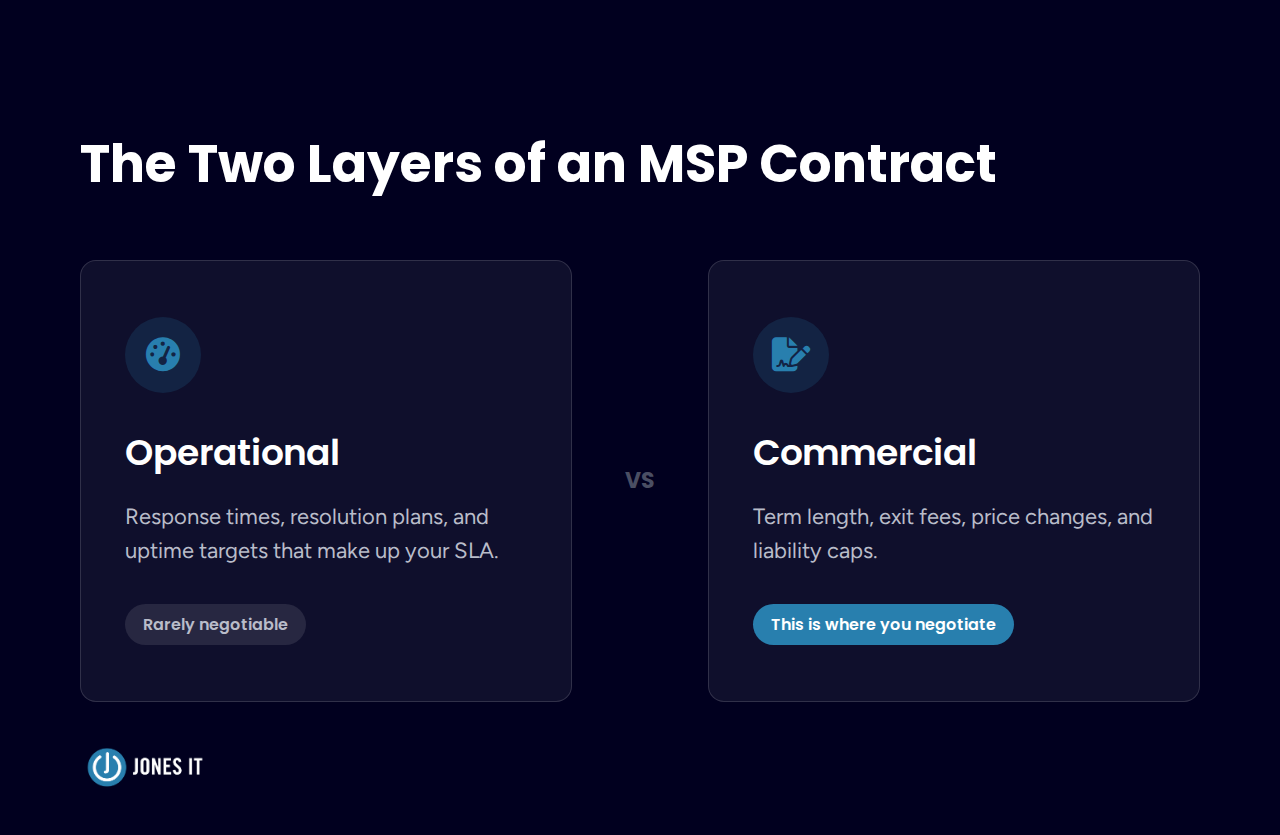
Founders who hesitate on a vCIO engagement usually assume the risk sits in the contract, a long term or a steep exit fee. A vCIO engagement can carry a clean, flexible contract with no exit fee at all, and still function like a rigid, hard-to-leave commitment. The lock-in lives in how the engagement is structured day to day, not in what the agreement says about leaving it.
When the vCIO Is Really Just an Account Manager
Some providers sell vCIO hours as part of a support bundle, and the person on the other end of those hours is closer to a client relationship manager than someone with real strategic authority. They'll run a quarterly check-in and summarize what the support team has been doing. What they won't do is push back on a bad technology decision, own a budget number, or bring outside pattern recognition from other companies at your stage. You end up paying for a title without getting the judgment, which that title is supposed to represent, and there's no clean way to tell the difference until you've been in the engagement for a few months and started asking harder questions than the check-in was built to answer.
When Strategic Hours Quietly Become Ticket Hours
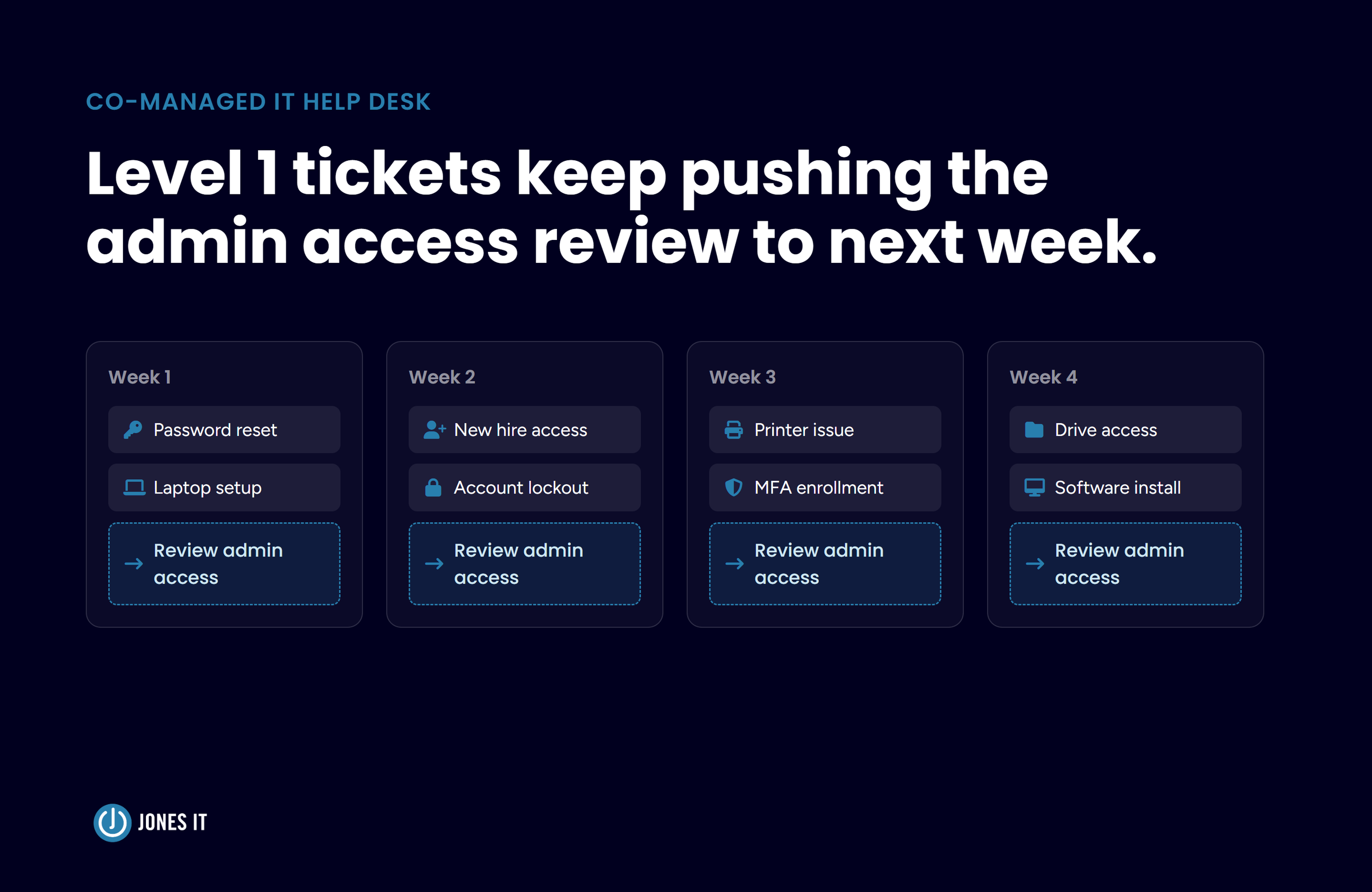
A vCIO engagement that shares a pool of hours with day-to-day support sounds efficient on paper. In practice, support work is urgent and strategic work isn't, at least not on any given Tuesday. A server outage or a phishing incident will always win the hour allocation over a technology roadmap review, because one has a deadline measured in minutes and the other doesn't. Left unmanaged, the strategic hours you're paying for get quietly absorbed into operational firefighting, and a year in, you notice you've never actually gotten a roadmap.
When the Roadmap Lives Only in One Person's Head
I've sat across from founders who described their vCIO relationship with real warmth. Smart person, good instincts, helpful in the moment. Then I'd ask what the actual technology roadmap looked like on paper, and the answer was usually some version of "he knows it." That's not a roadmap. That's dependence on one individual's memory, and it becomes a serious problem the moment that person is unavailable for a stretch, changes providers, or the engagement ends for any reason. A vCIO who never documents anything outside their own head isn't offering flexibility. They're offering a single point of failure with a nice title attached to it.
vCIO vs. Fractional CIO vs. vCISO: Which Title Fits Your Gap
The terminology in this space overlaps more than it should. A vCIO and a fractional CIO describe nearly the same role: part-time executive access to technology strategy, budget ownership, and roadmap planning. We break down that distinction in more detail in our guide to fractional IT, including where a fractional CTO fits for engineering-heavy companies.
A vCISO is a different role entirely, focused specifically on security governance, risk, and compliance rather than the full breadth of technology strategy. If your immediate gap is SOC 2 readiness, HIPAA compliance, or a security framework audit, a vCISO engagement is the more precise fit. If your gap is broader, budget ownership, vendor strategy, and a technology roadmap that spans the whole business, a vCIO or fractional CIO is the closer match. The structural risks above apply regardless of which title sits on the engagement.
How to Structure a vCIO Engagement That Stays Flexible
A vCIO engagement holds together when a few structural choices get made upfront, before the risk of an account-manager-in-disguise or an undocumented roadmap ever has room to develop.
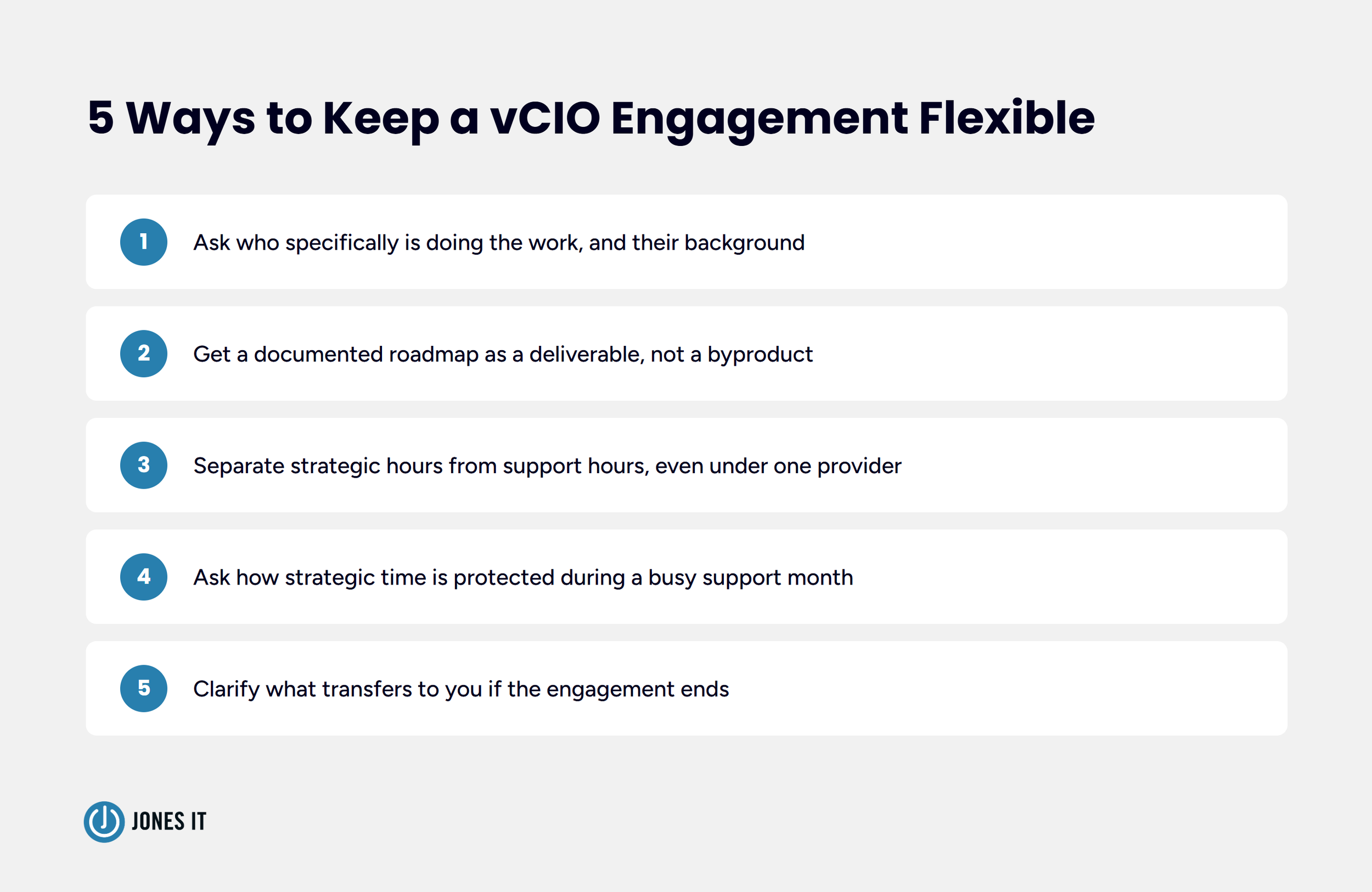
Ask who specifically is doing the work, and what their background is. A named individual with real technology leadership experience, not a rotating point of contact from a support queue.
Get a documented roadmap as a deliverable, not a byproduct. Written strategy documents, budget plans, and vendor decisions that exist outside any one person's memory.
Separate strategic hours from support hours, even under one provider. The two can share a team and a rate without sharing an hour pool that lets urgent work crowd out strategic work every time.
Ask how the provider protects strategic time during a busy support month. A real answer here, not a vague assurance, tells you whether the roadmap survives contact with a bad quarter.
Clarify what transfers if the engagement ends. Roadmap documents, vendor relationships, and strategic context should move with you, not stay locked inside a provider's internal files.
Signs You're Ready for a vCIO
A vCIO tends to make sense once a few specific signals show up at the same time.
1. Technology decisions are being made without anyone clearly accountable for the outcome. A team lead picks a new CRM because it looks the easiest to set up, nobody evaluates it against the company's data security requirements, and six months later it turns into a compliance headache nobody signed off on.
2. A fundraise, SOC 2 process, or due diligence review is approaching and needs credible technical leadership in the room. Investors ask who owns the technology roadmap, and the honest answer is "whoever has time that week."
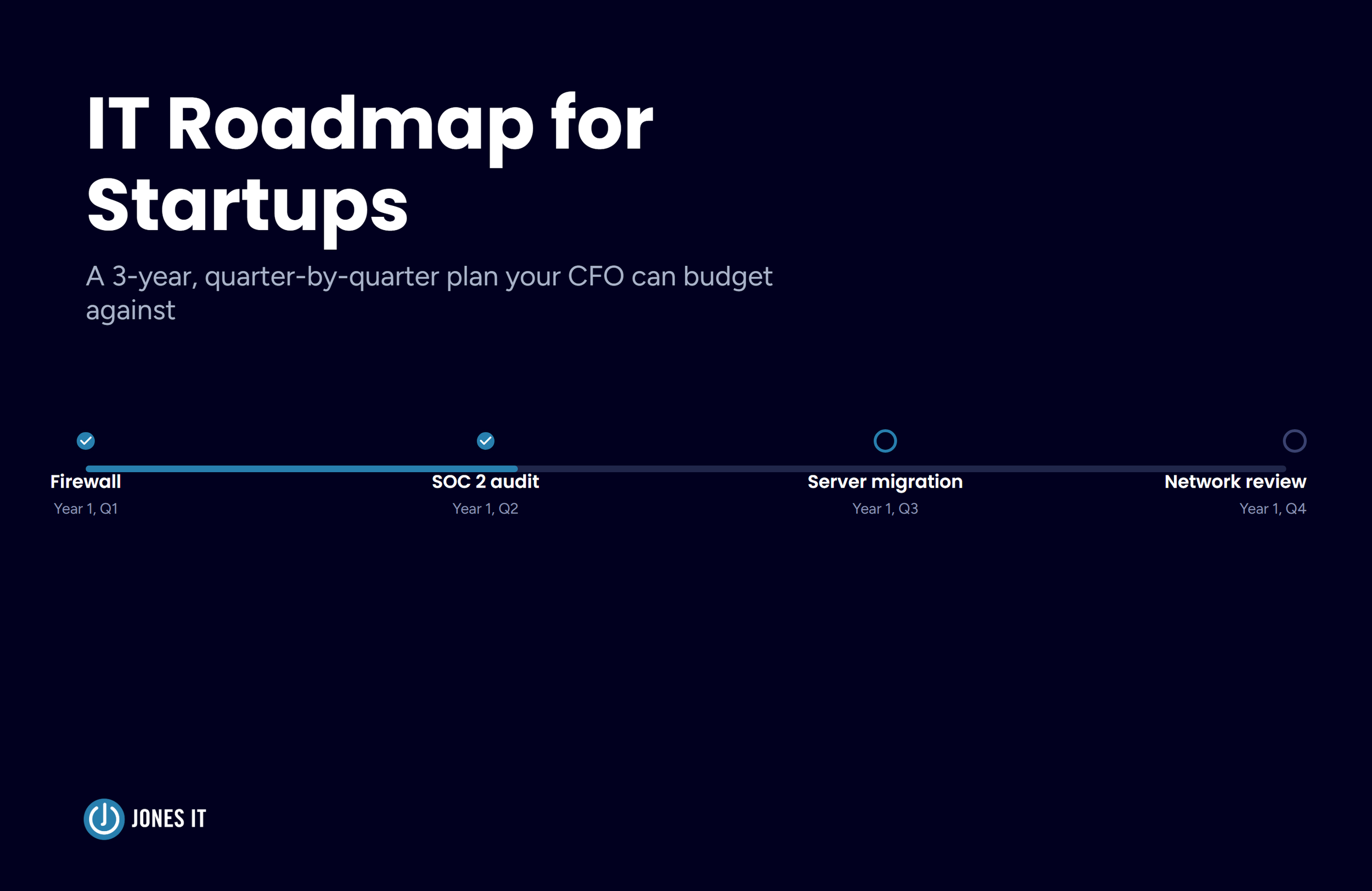
3. Your operational IT team is strong at execution but nobody owns a multi-year roadmap. Tickets get closed fast, systems stay patched, and the team is good at their jobs, but nobody's asked what the infrastructure needs to look like at double the headcount.
3. A full-time CIO or CTO hire isn't justified yet given current headcount or budget, but ad hoc decision-making has started to cost real time. Leadership keeps circling back to the same technology questions in every planning meeting because there's no standing owner to resolve them once and settle it.
None of these signals require an immediate full-time hire. However, they do require someone accountable for the strategic layer, backed by real documentation, which is exactly the gap that a vCIO role is built to close.
Getting Senior Expertise Without the Rigid Commitment
The value of a vCIO was never really in dispute. Senior technology leadership at a fraction of full-time cost is an easy case to make on its own. What determines whether that value actually shows up isn't the contract sitting underneath the pitch. It's whether the hours are protected from support triage, and whether the roadmap exists somewhere besides one person's head.
If you are currently evaluating your options and want an objective sanity check on whether your proposed setup will actually drive your long-term roadmap; or simply get lost in day-to-day support, we’re here to help. Whether you are trying to determine if you need a vCIO, a fractional CIO, or a vCISO, we can help you review your current structure to ensure your investment is building your business, not just putting out fires.
Frequently Asked Questions About vCIO
What is a vCIO?
A vCIO, or virtual CIO, is a part-time technology executive who sets IT strategy, owns the technology roadmap, and represents technology in leadership conversations, without joining a company as a full-time employee. A vCIO typically works a defined number of hours each month rather than a full schedule.
What's the difference between a vCIO and a fractional CIO?
The terms are largely interchangeable. Both describe part-time executive access to technology strategy, budget ownership, and roadmap planning. Some providers use "fractional CIO" to describe a more embedded engagement and "vCIO" for one delivered as part of a broader IT contract, but the core function is the same.
Is a vCIO the same as a vCISO?
No. A vCISO focuses specifically on security governance, risk, and compliance frameworks like SOC 2, HIPAA, or ISO 27001. A vCIO covers the broader technology strategy, including budget, roadmap, vendor decisions, and infrastructure planning. Companies with an immediate compliance deadline often need a vCISO first, while those without a clear technology roadmap need a vCIO.
How many hours does a vCIO typically work per month?
Most vCIO engagements start around 8 to 16 hours a month for strategic work, scaling up during a fundraise, audit, or major infrastructure decision and pulling back during quieter stretches.
What does a vCIO cost?
A full-time CIO typically costs $200,000 to $400,000 a year in salary and benefits, with Glassdoor's 2026 compensation data putting the typical range at roughly $175,000 to $310,000 and top earners well past $399,000. A vCIO engaged for around 10 hours a month at a standard tiered hourly rate runs closer to $30,000 to $40,000 a year.
How do you avoid getting locked into a bad vCIO engagement?
Confirm who specifically is doing the strategic work and their background, require a documented roadmap as a standing deliverable rather than something that lives in one person's memory, and ask how the provider keeps strategic hours separate from day-to-day support so urgent tickets don't crowd out the technology roadmap work.

About The Author

Evan JonesFounder and CEO of Jones IT
With over two decades of IT experience in San Francisco, Evan guides Jones IT's long-term strategy, finances, and culture, with a vision of building the city's highest-rated IT services firm. Outside of work, you'll find him on the golf course or running Bay Area Warriors, his non-profit connecting Bay Area kids to college through basketball.
Learn how IT support for VC firms works best as a shared baseline. Protect your portfolio companies without adding a central help desk operational burden.